Date: 1/3/2026
Trip leader: Paul Griffiths
Party: Terry Sze, Matthew Norton, Ilana Bannick, Patricia Sanchez Rios, Aidan Irrgang
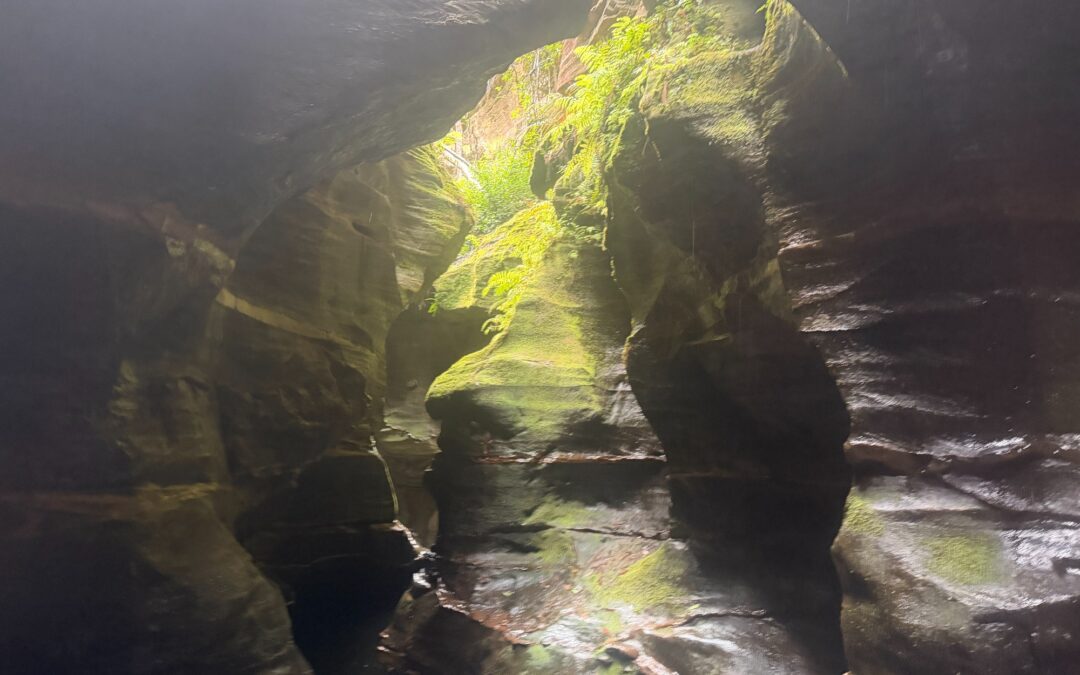
The Twister & Rocky Creek canyons are two absolutely beautiful canyons that make for a perfect day trip from Sydney. Both canyons are ideal for first-time canyoners who have previous bushwalking experience. The two canyons consisted of somewhat steep drops into water and sliding down rockface. Our initial plan was to do both of these canyons, however 48 hours before the start of the trip Paul made a tentative decision to only do Twister and do a different canyon instead of Rocky Creek. This was because of the intense rainfall that the greater Sydney and Blue Mountains had endured over the week. However, upon arriving at Rocky Creek to check it out, we were pleasantly surprised at the lack of water flow and determined it was safe to proceed with Rocky Creek. This was a very pleasant surprise to everyone, I myself am a big fan of Rocky Creek so was very happy to be able to do that one too! More on this later in the report.
Getting to the Canyons:
The trip up to the canyons was relatively eventful! Each of us made our own way to Katoomba by train or car (although overnighting in a hostel is an option), meeting at 8AM outside Katoomba railway station on a very dreary Blue Mountains Sunday morning. We combined ourselves into the two cars, grabbing a bite to eat in Blackheath on our way up to Zig Zag Railway Station where the dirt road commenced. Once we approached Zig Zag Railway station, the dirt road commenced and would take us the rest of the way up to the entrance of the canyon.
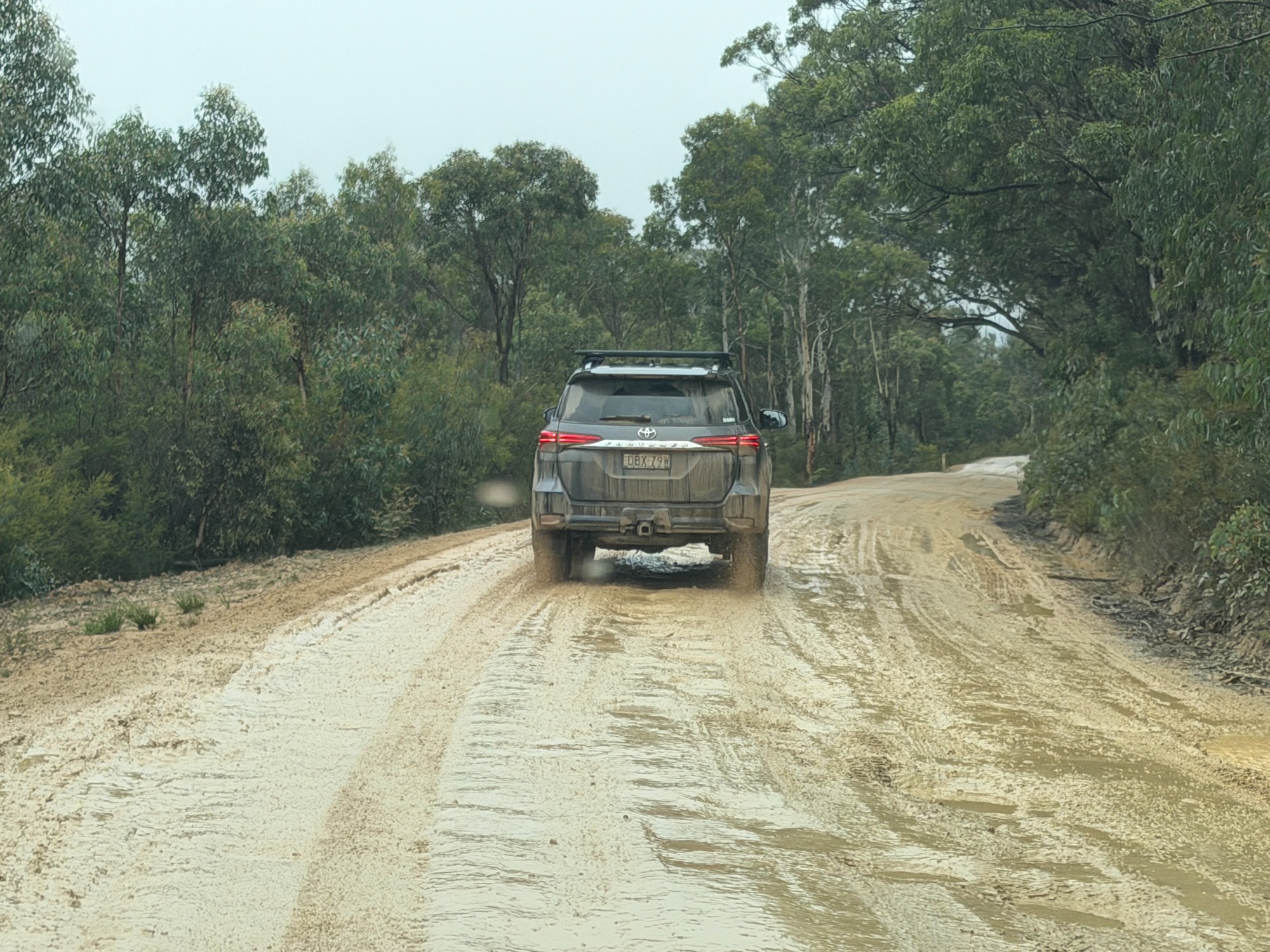
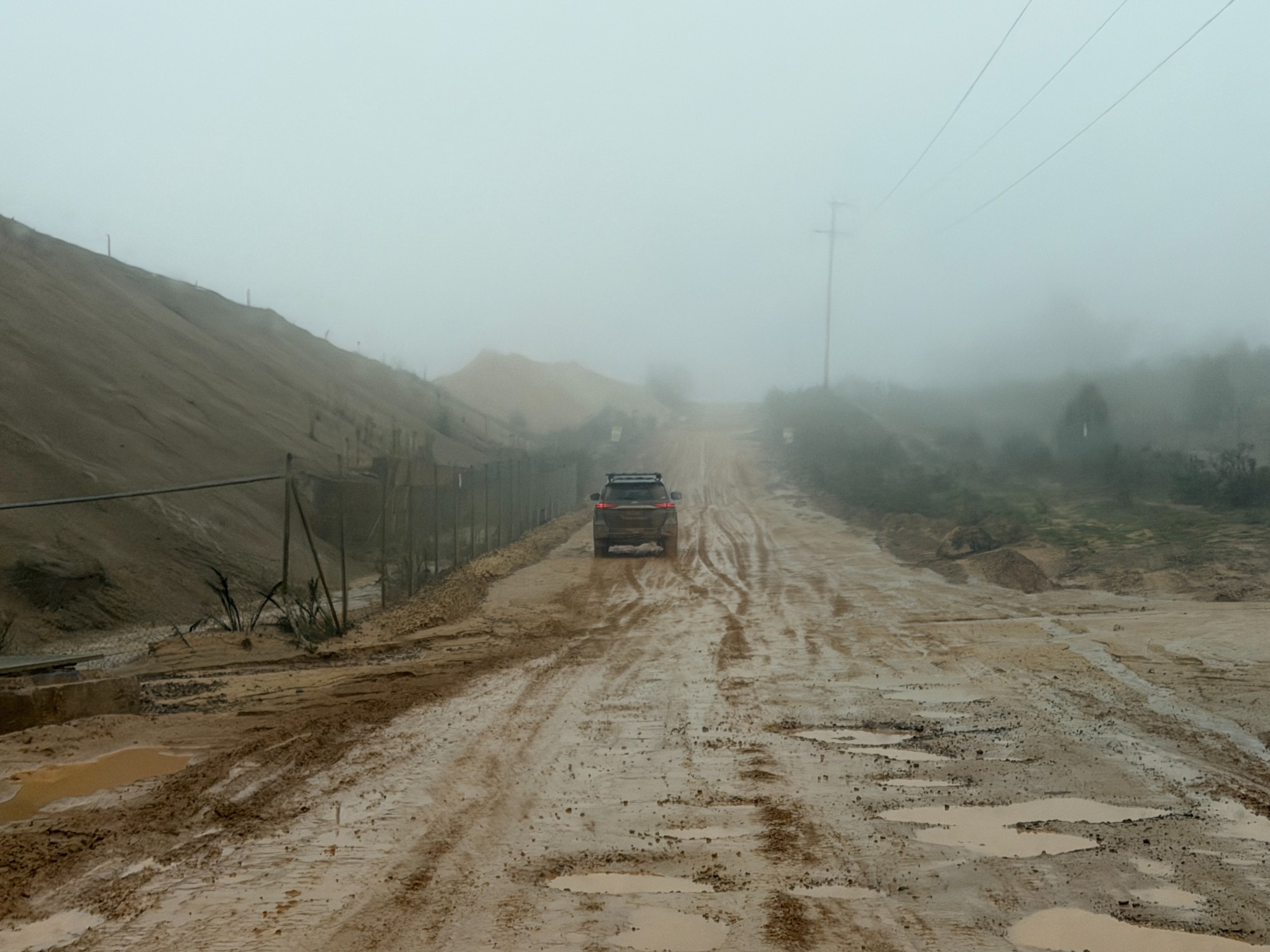
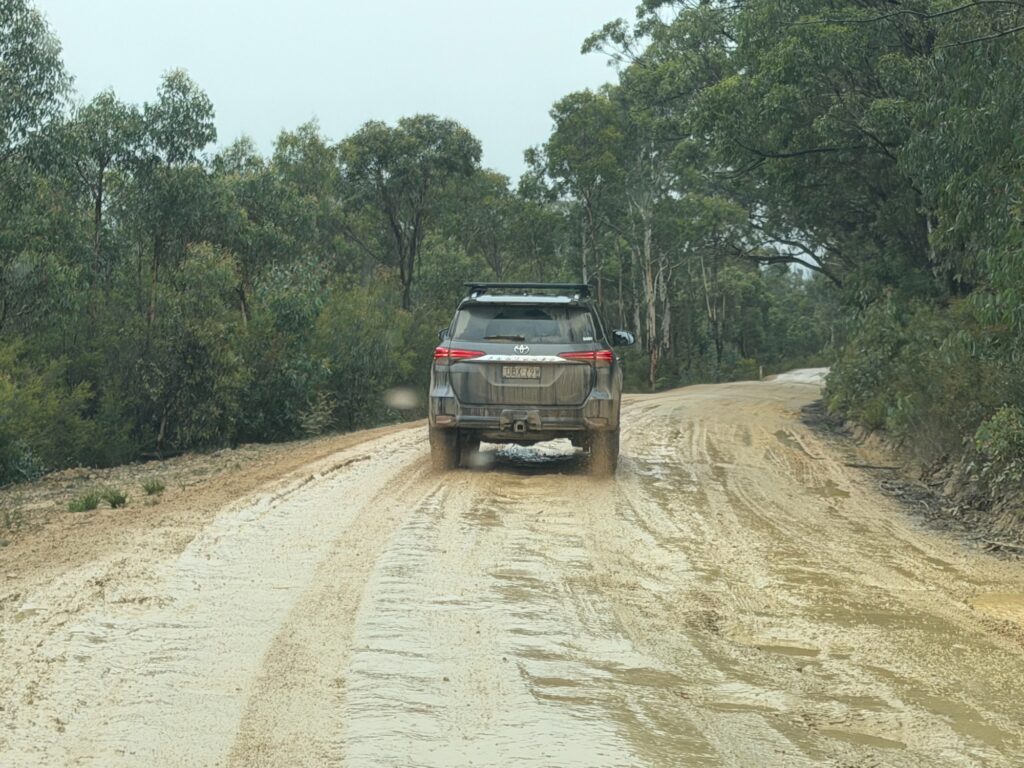
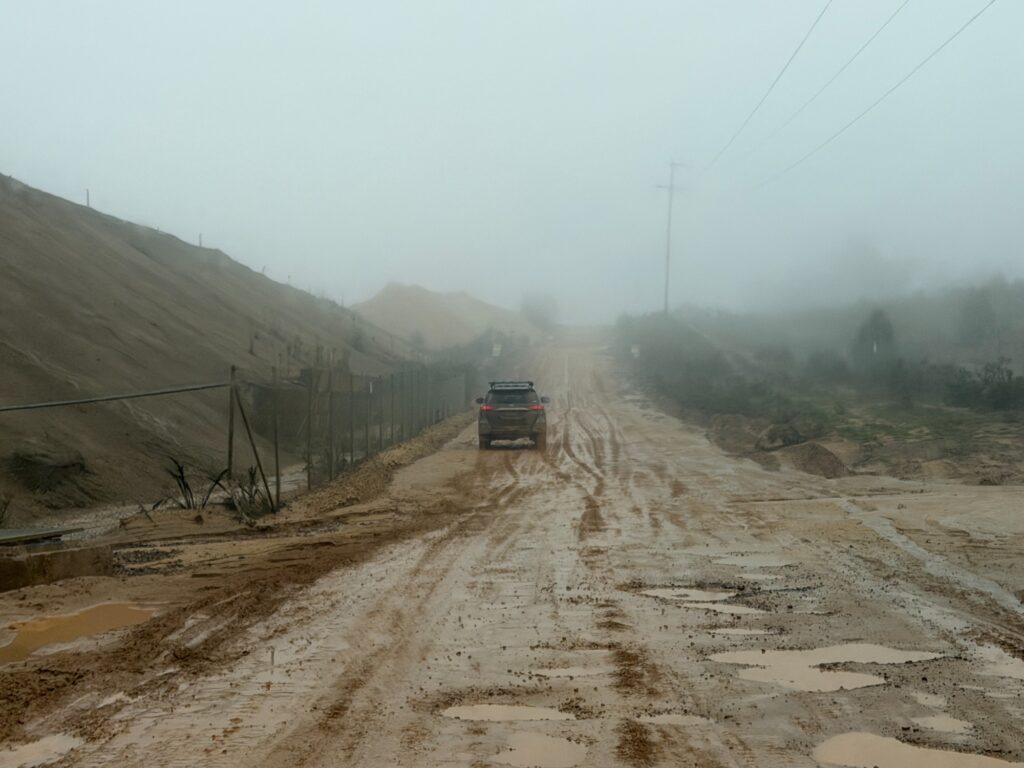
The dirt roads were in mixed condition. The initial section of the dirt road up until a series of industrial quarries was in relatively poor condition. This was likely because of the relatively large amount of rainfall that the Blue Mountains had over the prior week. The quality of suspension was certainly tested during the drive! However, we were pleasantly surprised that the second section of dirt road which is maintained much less frequently was in relatively good condition. Future trips should ensure that the prior rainfall and thus the likely condition of the dirt road is considered in determining an appropriate vehicle to use for the trip – we found that it would be very challenging to drive the road in a regular, non-four wheel drive vehicle. The entire trip from Katoomba to the entrance of the canyon took us well over an hour, future trips should consider this when planning an appropriate time to meet.
Arriving at the canyons we did the initial climb-down relatively quickly, although with one or two slip and falls down the slightly mossy and slippery rockface. Eventually we arrived at the canyon and proceeded straight in, as we had already got into our wetsuits where the car was parked at the top of the climb. However, on a particularly hot day, it is recommended to wear bushwalking gear for the climb down and get changed into wetsuits at the entrance of the canyon.
Structure of the Canyons & Their Consecutive Nature
The two canyons, Twister and Rocky Creek, are situated consecutively. An initial climb down to the entrance of the Twister canyon takes approximately twenty minutes. Following this, you enter the Twister canyon itself and complete the canyon in between sixty and ninety minutes. Many people then decide to conclude their canyoning day with Twister and perform a climb-out near where the Twister canyon ends. However, others choose to continue their descent about thirty minutes further into the entrance of the Rocky Creek canyon. The Rocky Creek canyon can then be performed as an out and back canyon (weather conditions permitting that it is still safe to return upstream), or as a one-way canyon with a very steep climb-out via a back entryway to the canyon. The latter option is not used often and is not recommended as it involves a long walk-back to the car and is technically more challenging. If the former option is used, the group can simply return back through the Rocky Creek canyon the same way that they came in, and perform a slightly longer climb-out back to the car.
Our Twister Experience
Arriving at the entrance of the canyon, we quickly saw there was an initial wade through the water, not much deeper than ankle depth, before we got to the main section of the Twister canyon. The start of the canyon involved a significant number of slides, where we each took turns to slide down the slippery rockface and into pools of water below. This was a far safer approach than walking or crawling along a descending rockface where we would almost certainly slip and fall, creating a far greater hazard than sliding down the rocks.
A key hazard was the unknown depth of water in each section/pool. While some of us who had been to the canyon before had a vague idea of the water depth, this memory was hazy at best and could not be relied upon. Further, additional hazards (e.g. logs) could have become present since the last time each of us were in the canyon. As a result of both these factors, it was decided that for the most dangerous and high-altitude jumps, one of the trip leaders would initially climb down to check the safety of the jump location, and once deemed safe would indicate the exact location that was appropriate to jump into.
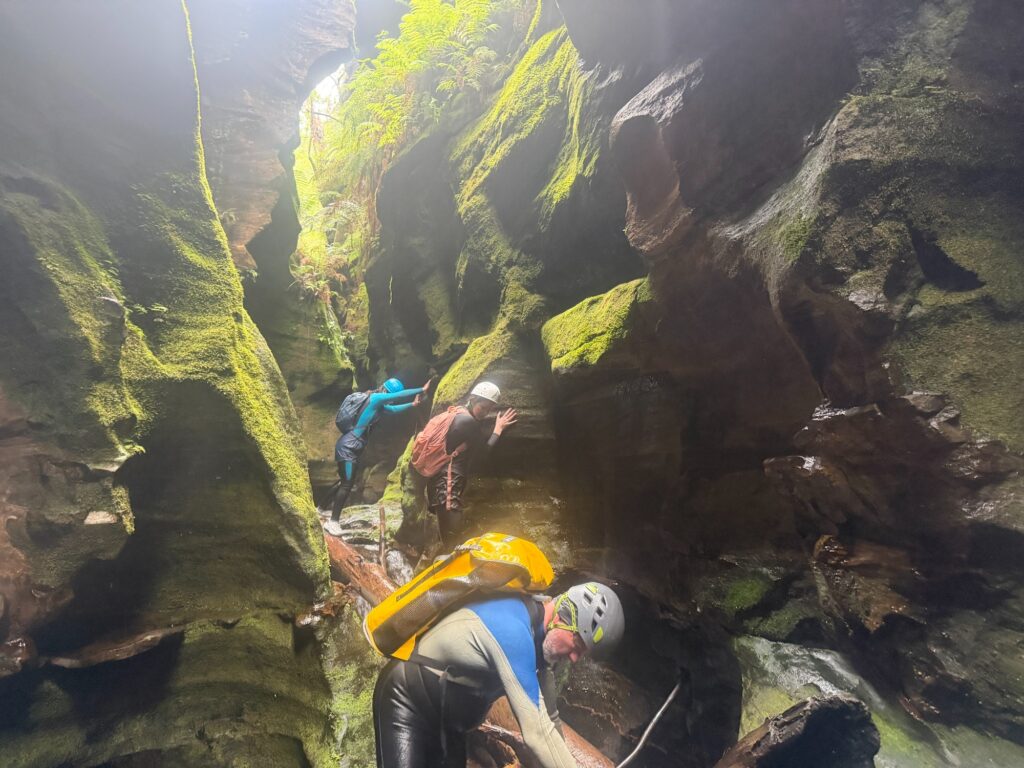
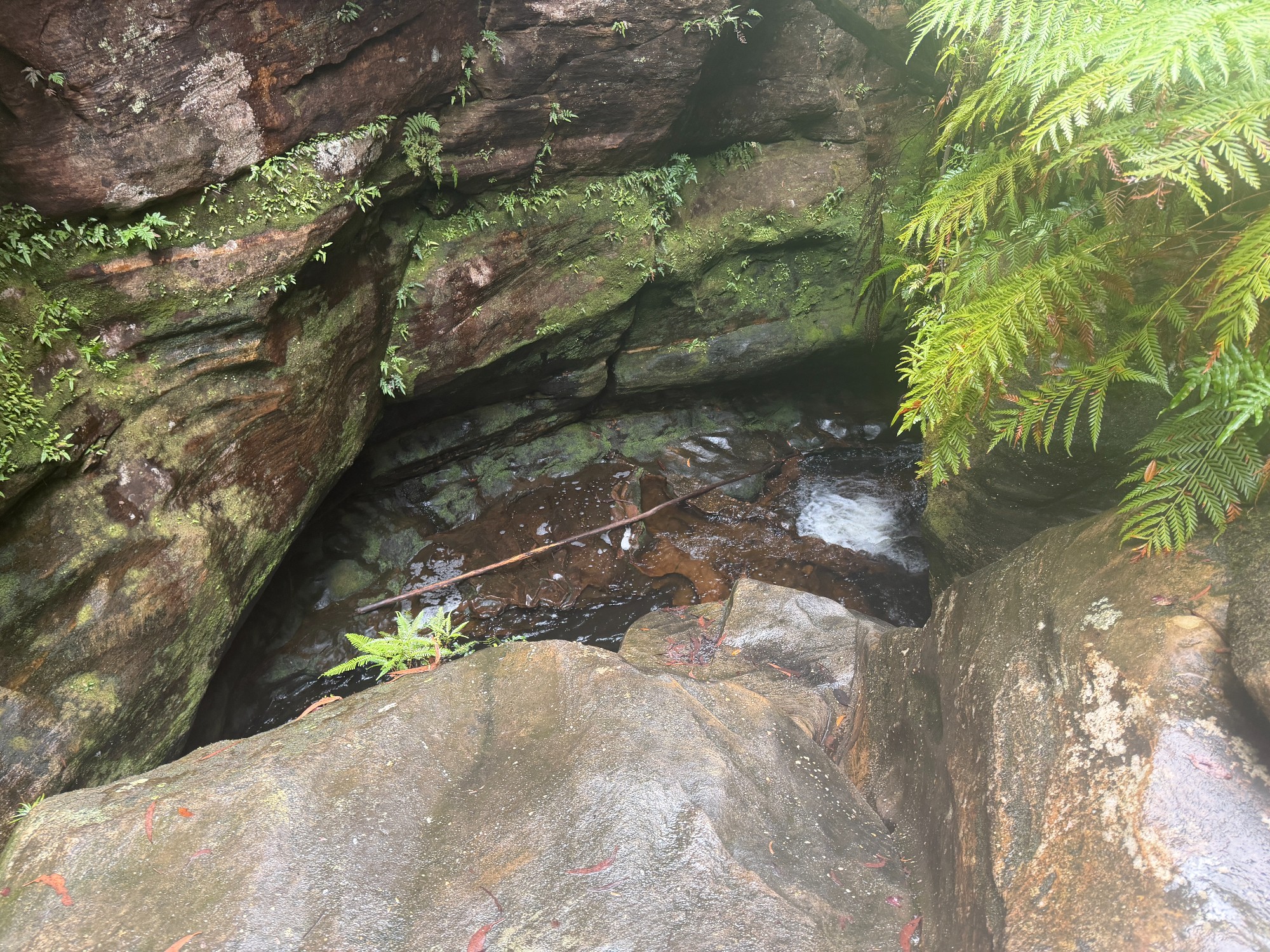
We continued to slowly progress through the canyon, going relatively slowly as it was a party of six and we needed to wait up at multiple points to progress through a particular section one-by-one. There were a number of different challenges including sliding down rocks and relatively big jumps into water. One particular point involved either: a jump down into a very deep but small pocket of water, a slide down into said body of water but involved very narrow and awkward head clearance, or a climb-down along the side with no real mechanism to hold on while climbing! Most of us chose to jump into the water. We all enjoyed this problem-solving element of the canyon.
The final component of this Twister canyon involved a hand-over-hand climb down a steep cliff face section. There was a small amount of rope already set up for this section, but the party decided to set up a belay system to help get everyone down. This was a wise idea and gave everyone the proper peace of mind to get down this final, approximately 6 metre cliff safely.
Our Rocky Creek Experience
After we finished the Twister canyon, we took a quick break and then proceeded to walk down to Rocky Creek canyon. We kept our wetsuits on for this walk – it is a relatively short distance and protected from intense sun, so it is not advised to remove and then put back on the wetsuits. At this stage, we assumed Rocky Creek had too much water to do safely on this particular day, and so we were just walking down to take a look at the entrance of the canyon.
After a brisk walk and climb down (there is one slightly technical but manageable climb down rockface) into the entrance of Rocky Creek, we were all extremely surprised by what we saw – completely normal levels of water flow! Paul was the first to get down and notice the lack of water flow, and everyone else followed suit in their shock. The level of water was essentially normal! Various theories were poised for this, but no one really knows for sure why the water flow was normal in spite of the intense rainfall during the preceding days.
In any case, we decided to attempt the canyon after a quick stop for lunch. We didn’t have much food between us as we assumed we would be coming back to the car by this point – although we made do with what we had.
The initial part of the canyon was a jump down into open water. Paul did the initial climb down to check the depth, and I was the first to jump down – although I completely misjudged and landed in a relatively shallow section! Fortunately all was well and I encouraged everyone to bend their knees so that the impact would be reduced if they made the same error.
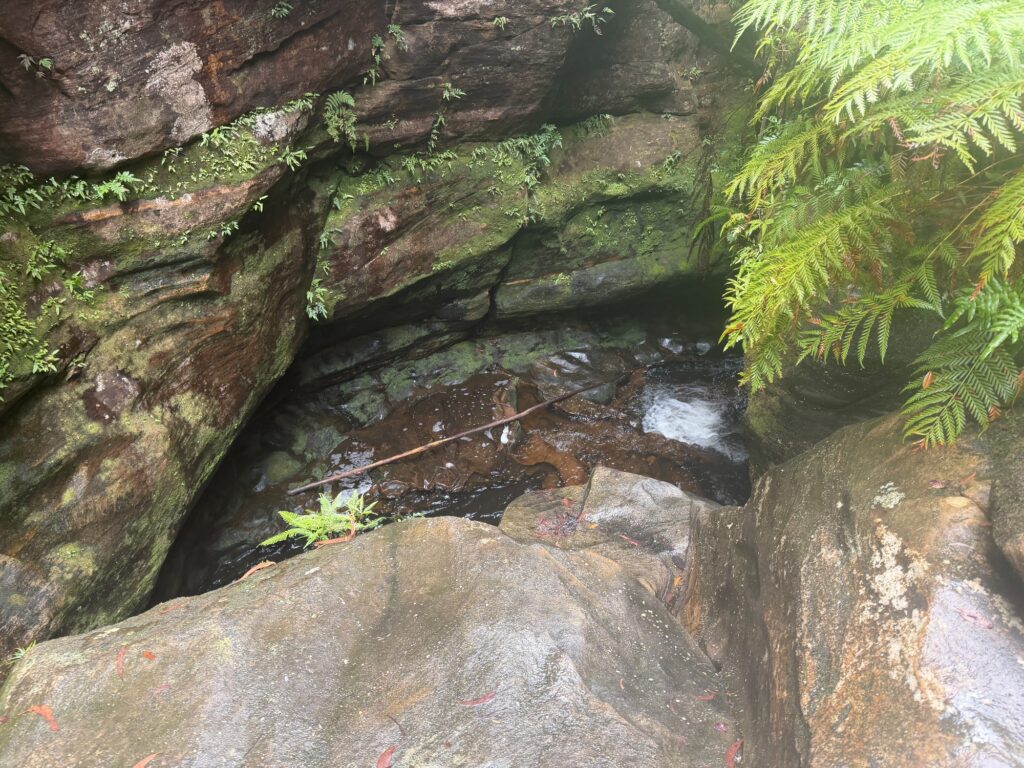
One of the most challenging bits of the canyon was the so-called “washing machine”, which involves a slide down a very narrow section with rapidly flowing water. We all handled it well, knowing that the climb back out going upstream would be far more difficult.
We continued moving through the canyon slowly, carefully checking jumps and slides to ensure safety. One of the most interesting bits of the canyon was a slide down into a very large rectangular pool of water (probably twelve metres or more in length.) The scale of the pool was somewhat surprising to see in the canyon. We each took turns to slide down into the pool, taking care when clambering towards the start of the slide so as not to slip and fall (this was easier said than done!)
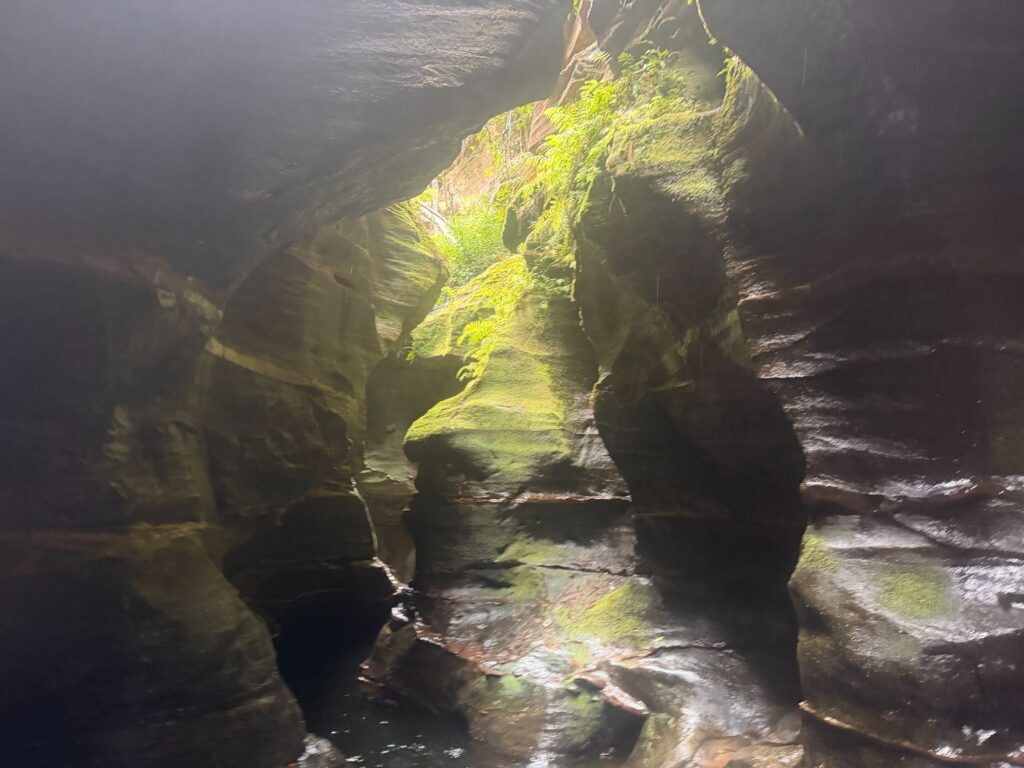
Following this, we continued to move through the canyon, coming into a nice area we nicknamed “the shower”. Some of us took turns going underneath the shower of water coming from up the mountain.
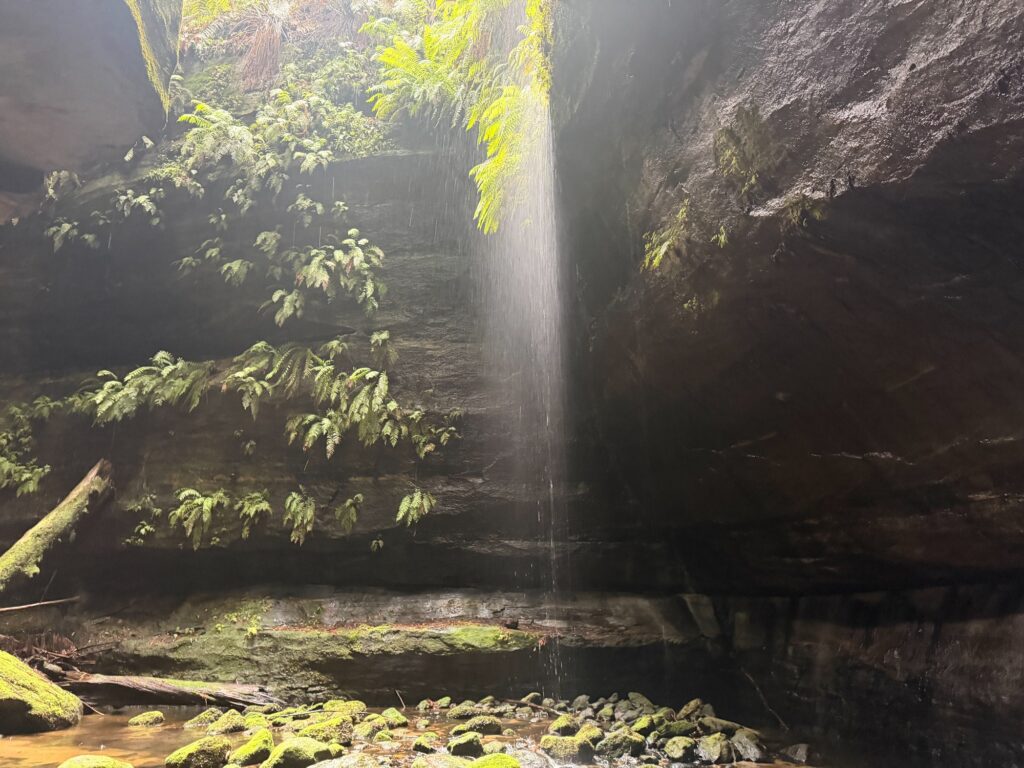
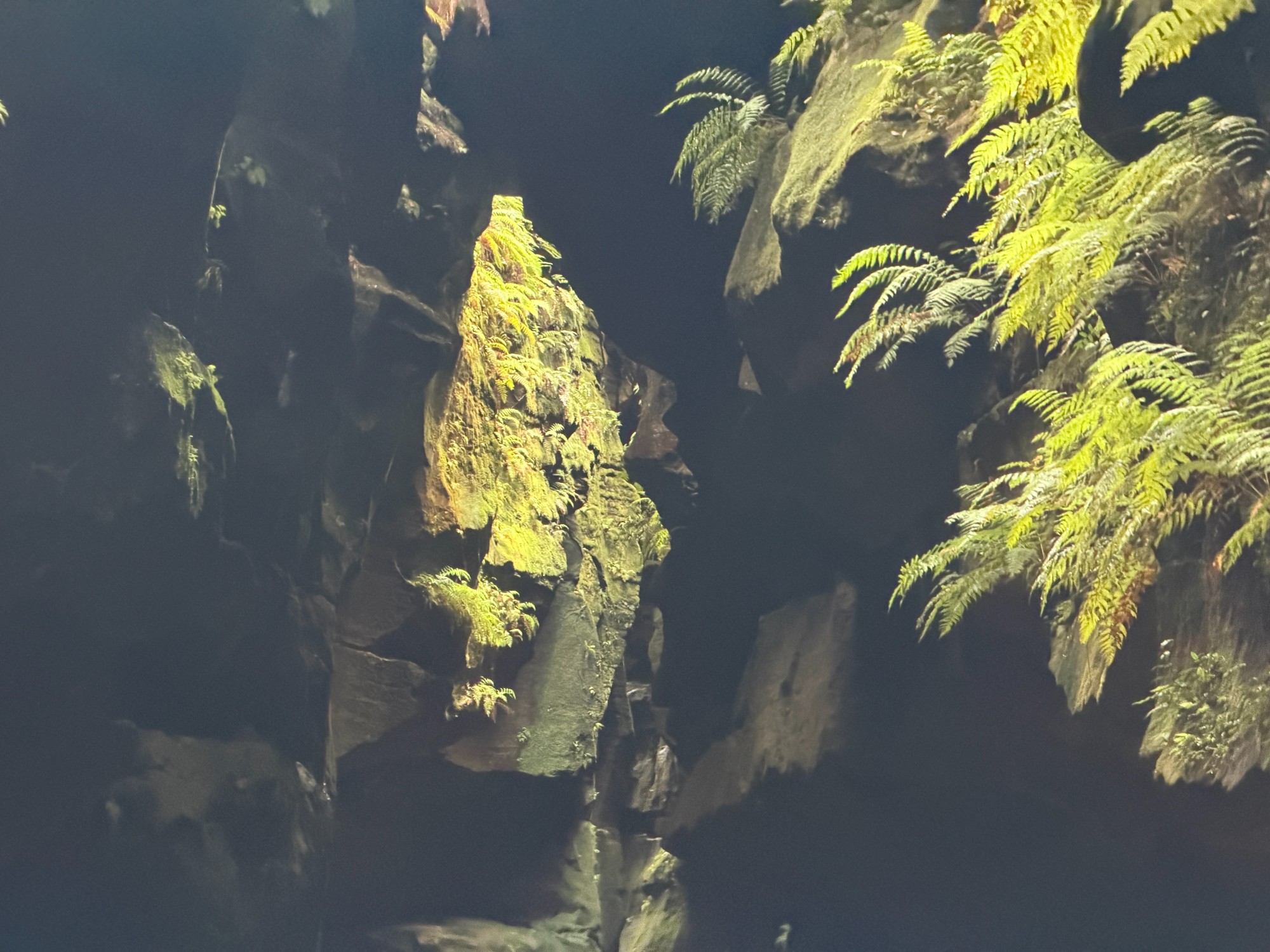
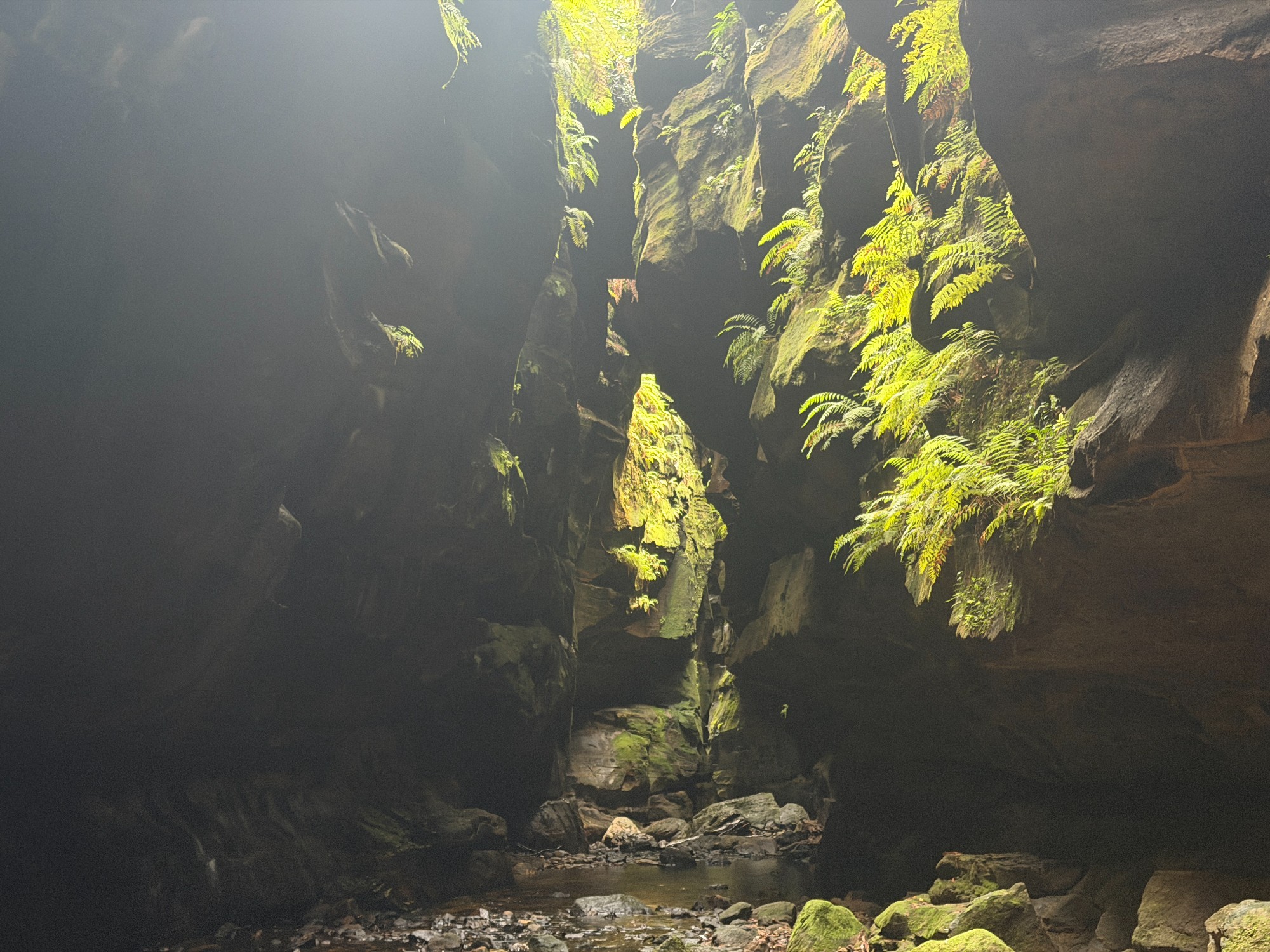
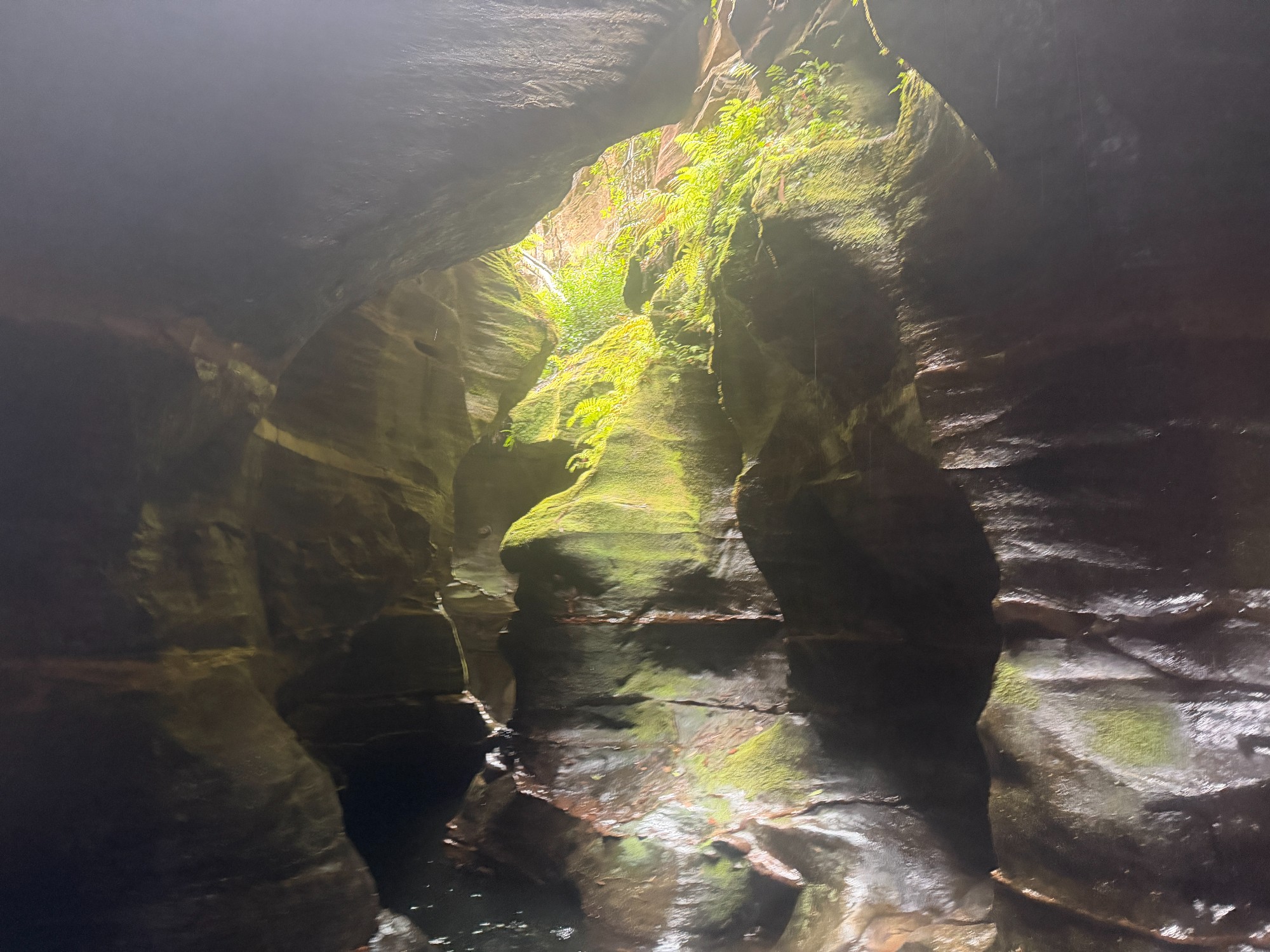
The final component of the canyon was perhaps the most beautiful – large stretches of relatively narrow, hallway-like water flow with beautiful green plant material visible above us. We enjoyed floating and slowly swimming through with the current on our backs, looking up at the beautiful scenery from this magnificent canyon. It was really quite breathtaking and was the moment of the day for me.

Reversing through Rocky Creek
We eventually got to the end of the canyon, and decided to proceed out the same way that we came in through the canyon. The reversal saw us go back through the same, beautiful scenery that we saw on our way in.
There were a few technical differences in the walk out in comparison to the walk in – perhaps the most significant is that we were now going against the current of the water, so had to work significantly harder to make progress through the canyon. It probably took us slightly longer to walk out, mostly for this reason.
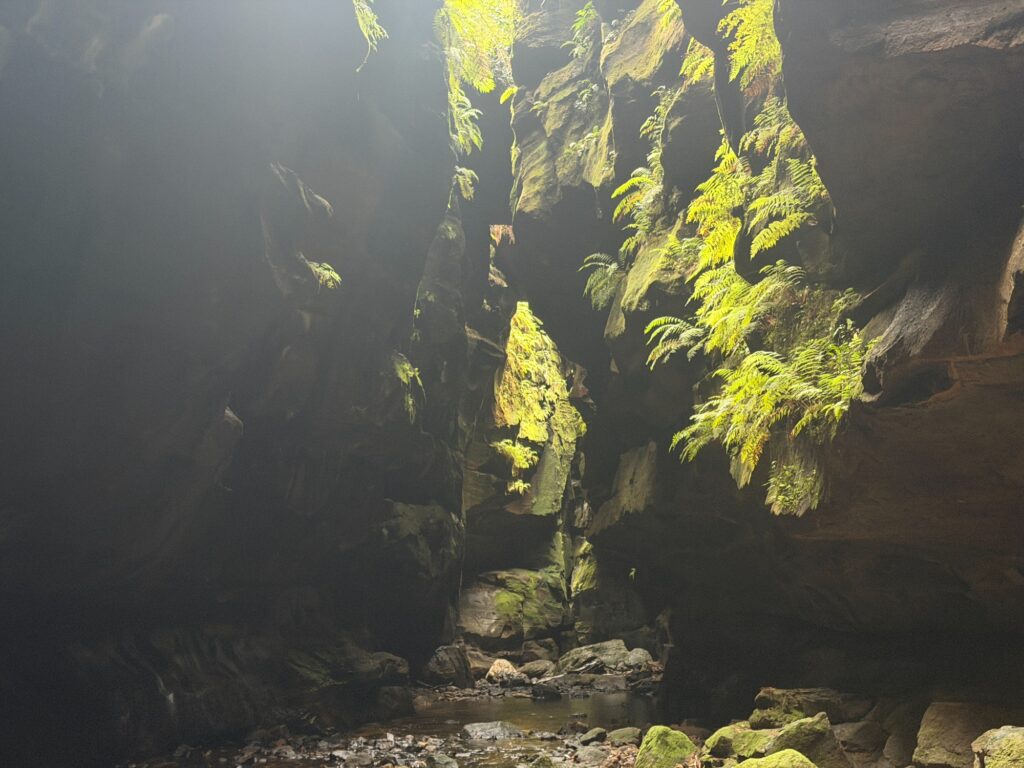
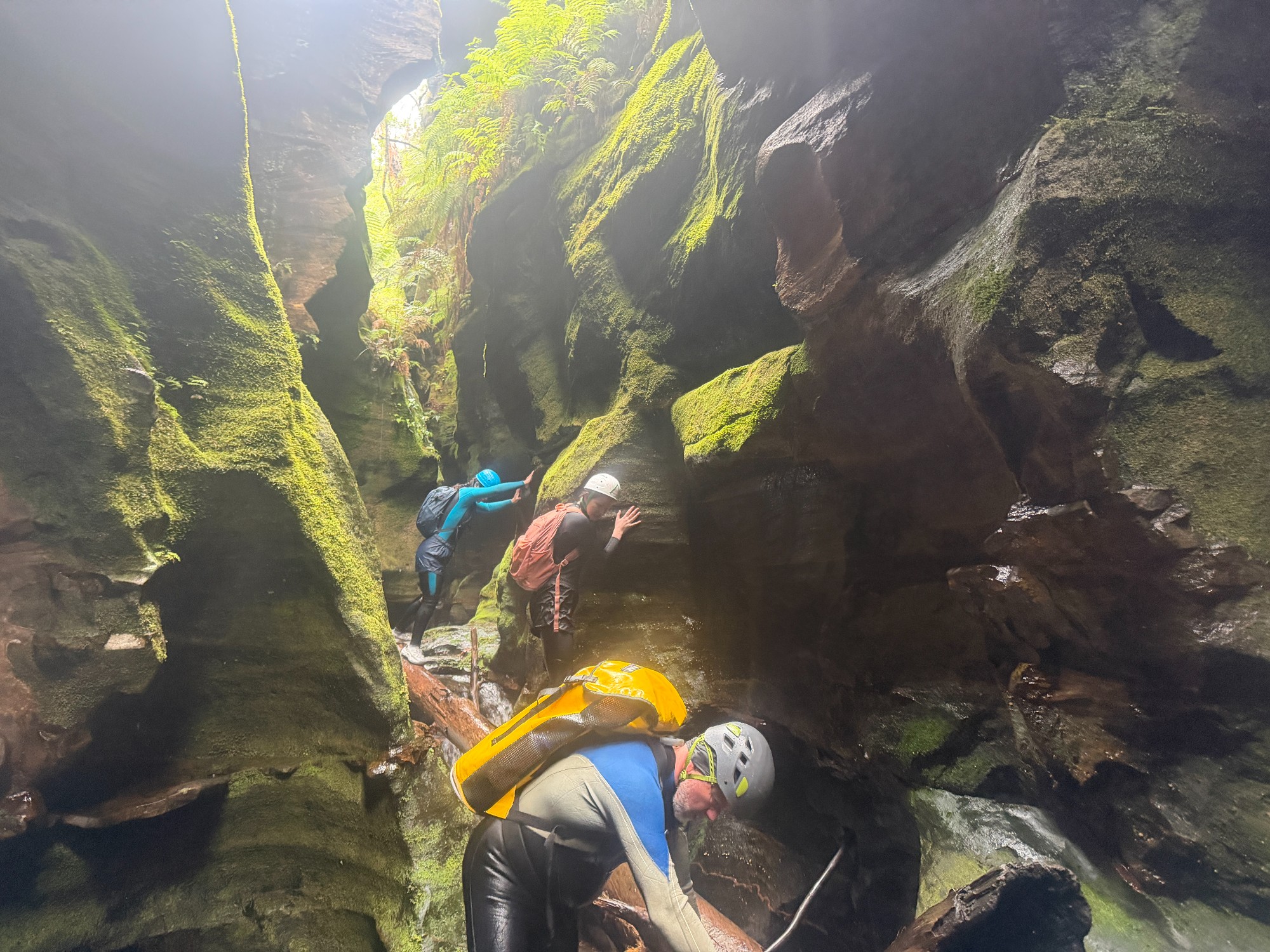
For the sections where we jumped into open water, we needed to find alternate approaches to getting up each section. In the slide into the open water bit, we needed to instead climb up using small bits of rock that had been engraved into the rockface as handholds. However, the most challenging component of the climb out was back through the so-called “washing machine” mentioned earlier. It took some of us a few tries to get out of this technical section. We each passed up our packs so we would have one less thing to worry about. The initial section of the washing machine was challenging as it involved a significant amount of water flow rushing down to clear. However, the subsequent section involved a very awkward foot positioning pattern in order to clamber out of the rockface. Enough momentum needs to be gained in order to make it across. After a while, all six of us in the party made it through both sections. It was very much the fun challenge of the day!
The final component of the Rocky Creek climb-out involved crawling up a “spiral” in the rockface. This narrow section called for careful foot placement and contorting one’s body in various unique ways!
Climb-Out & Returning Home
The spiral was the final component in Rocky Creek, and so upon clearing it we took a rest break before climbing out. Myself and a few others decided to de-kit ourselves here changing into bushwalking gear, while others kept their wetsuits on and waited until getting back to the car to change. I preferred changing out of my wetsuit but this was not a consensus opinion. I would recommend that on an even marginally hot day, it is best to de-kit at the end of Rocky Creek to avoid a 30-60 minute climb out, in the heat, in a wetsuit.
The climb-out felt pleasantly quick and easy compared to the last time I did this trip – probably because it was a relatively cool day! There isn’t anything particularly challenging for this climb out – just expect relatively regular bushwalking conditions. There is a trail established for people to walk on.
Eventually we returned to the car at about 3:30- by this stage very much keen to eat our lunches that most of us had left in the car (given we didn’t anticipate doing Rocky Creek at the start of the day.)
After everyone had eaten and changed, we decided to hit the road. We drove back through the same dirt roads we entered, reminding ourselves of the poor conditions that some parts of this dirt road suffer from! Each of the two cars had their fair share of mud on the car. Upon leaving the canyon, the weather deteriorated surprisingly rapidly, with a layer of fog and mist clouding the car and making visibility relatively poor.
We eventually arrived back at Zig Zag Railway and back into civilization! We decided to drive back through Katoomba and grab a drink at The Old City Bank. We reminisced on the incredible day that we enjoyed together.
Eventually, it was time to head back to Sydney, with all participants either driving back or catching a lift with someone who had a car. We got a good run back to Sydney and I was home at 8:30pm.
It was a long but incredible Sunday and a perfect way to start Autumn with SUBW.