Date: 27-29/11/2025
Trip leader: Terry
Day 1: Grand Canyon at night
One day, I was scrolling through the commercial canyoning operators around Blue Mountains, and got this cool trip idea of doing Grand Canyon at night. The canyon is lined with glowworms, a spectacular sight that’s still easily accessible. With a group of 4, we parked at the start of Grand Canyon walking track, starting just after 8 pm. There was still a bit of sunlight until we were half an hour in at the anchor of the first abseil.
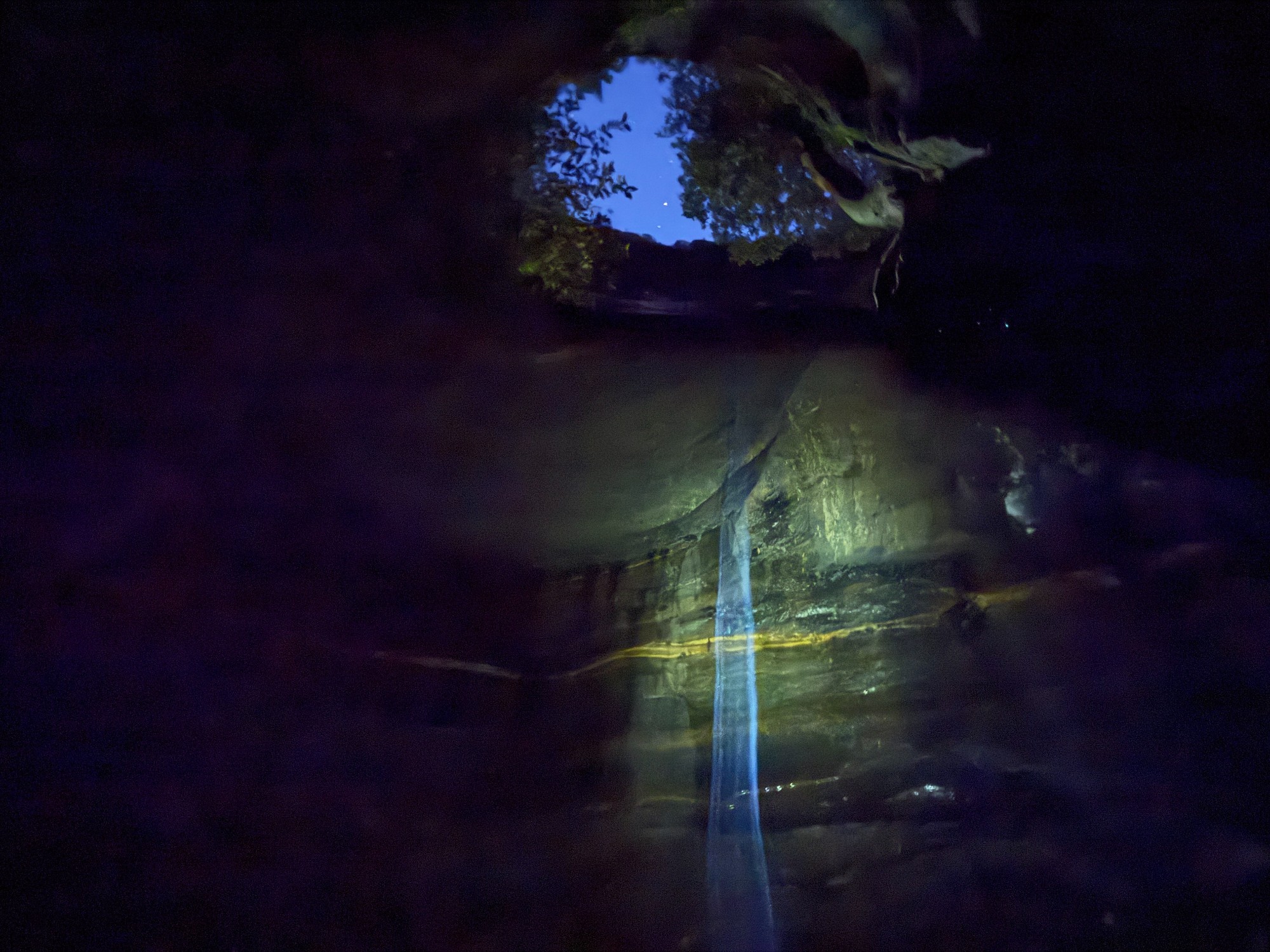
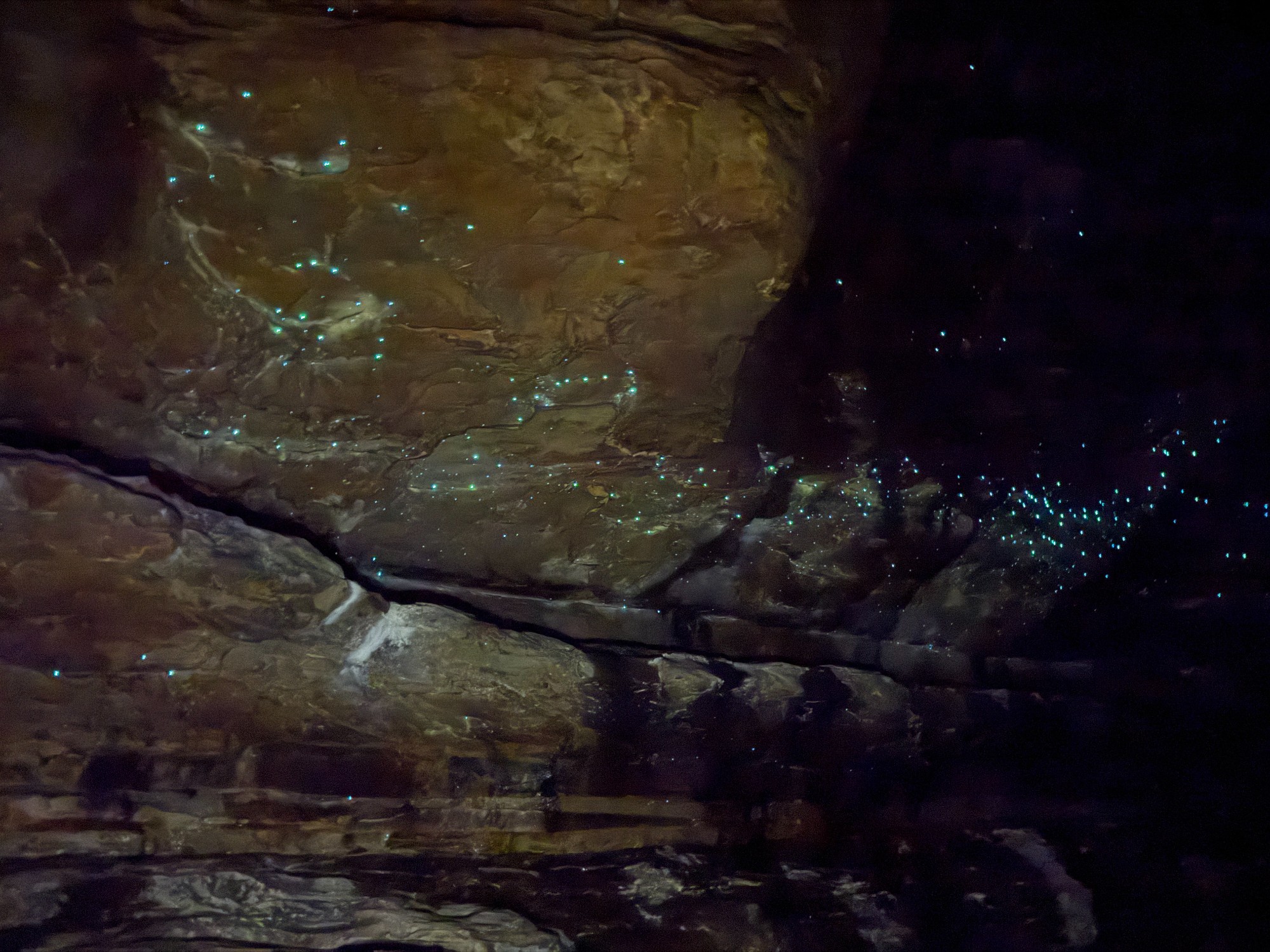
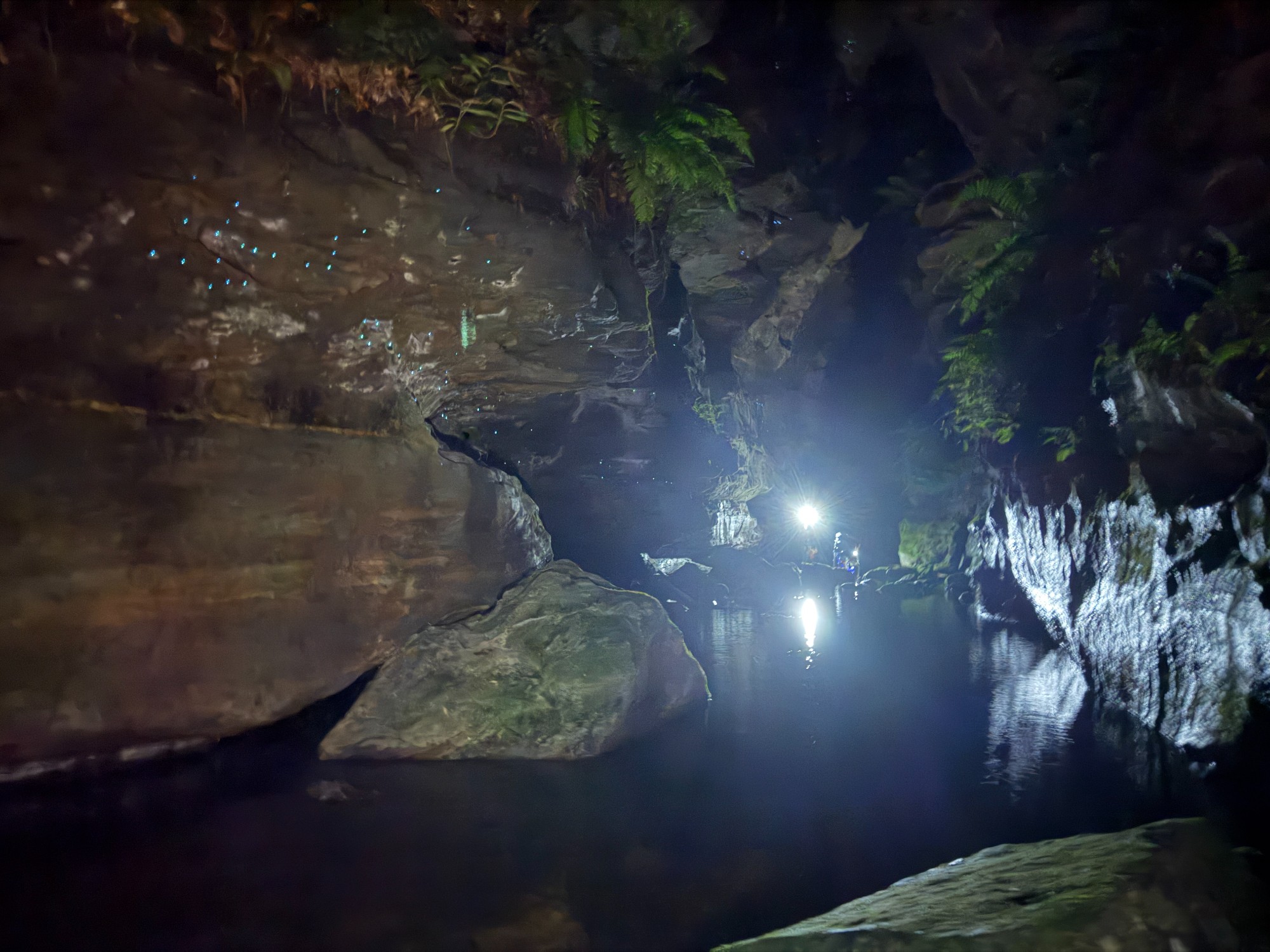
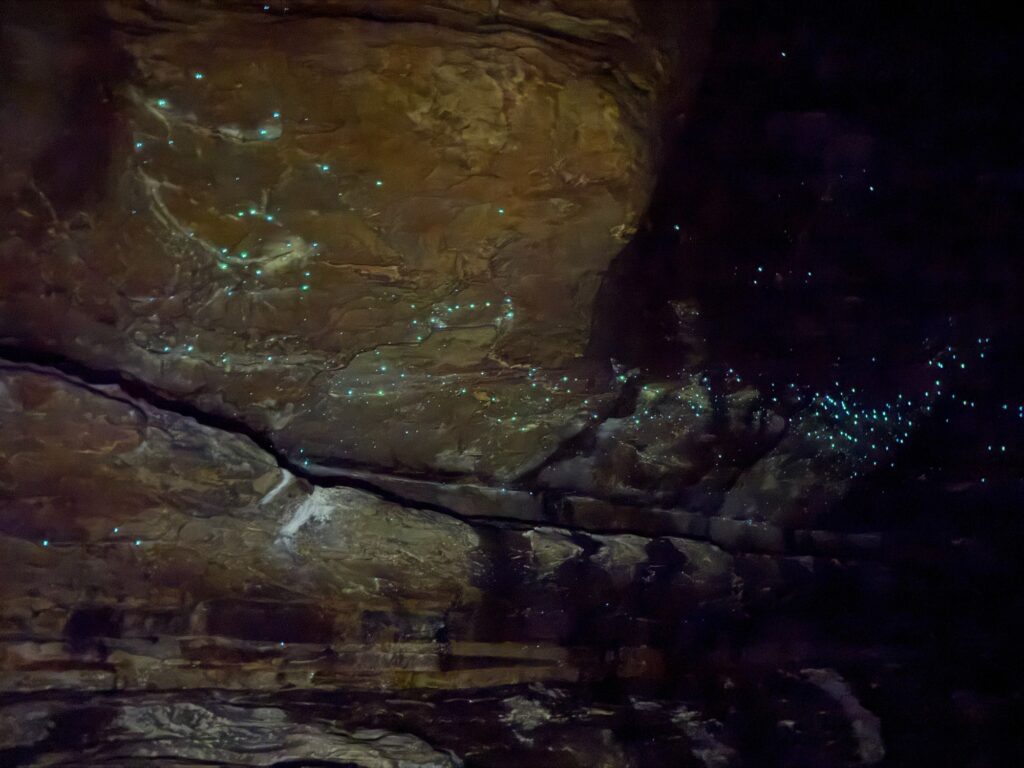
Adam had the anchor set up while we were still changing into wetsuits. I forgot to bring my head torch from my home, the most important thing in a night canyon, and was relying on Adam’s crappy hand torch. I went down the abseil first, essentially in full darkness with a torch that’s barely bright enough to illuminate the pitch, but at least it’s a short one and seconds later I got to the canyon floor, ready to belay everyone. A few glowworms around the pitch to appreciate as I was waiting for others to come down, which didn’t take too long with our reasonably experienced group of 4. Pictures in low light conditions are really hard to capture, and it’s hard to portray the scale of glowworms you see in this short canyon.
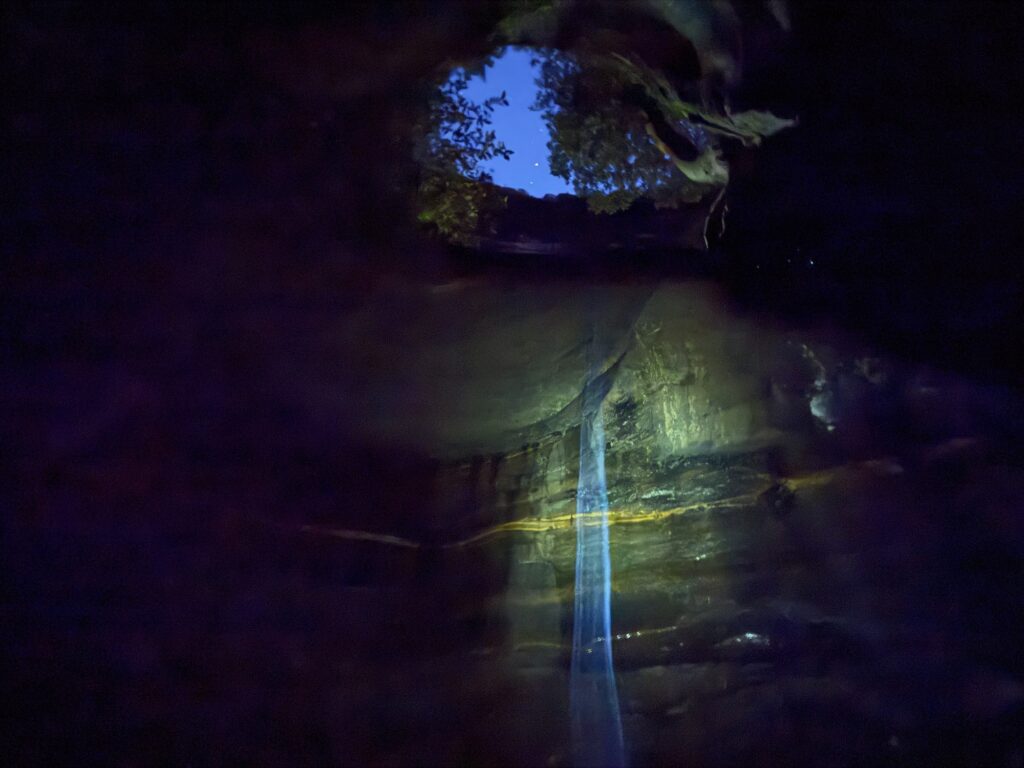
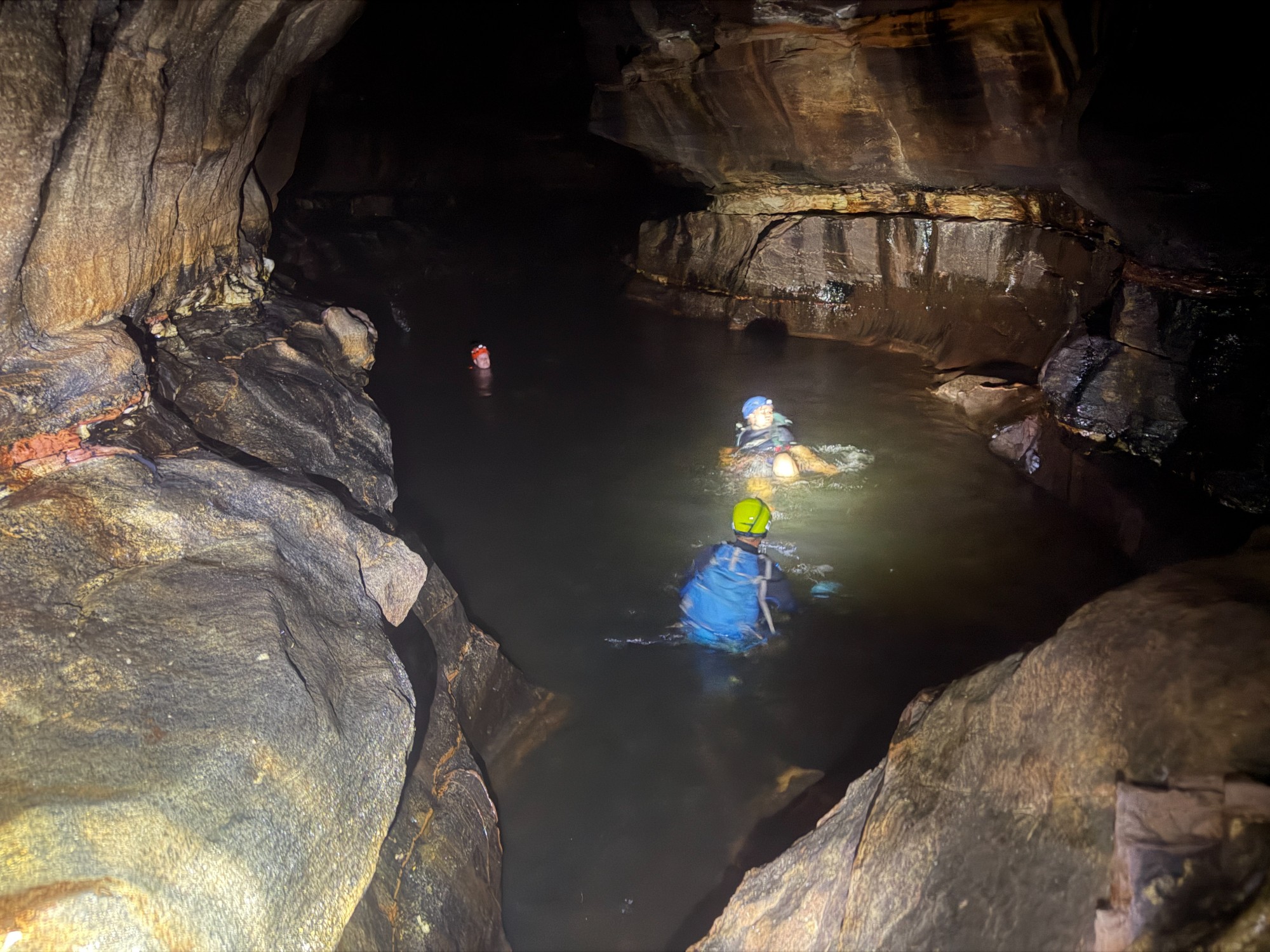
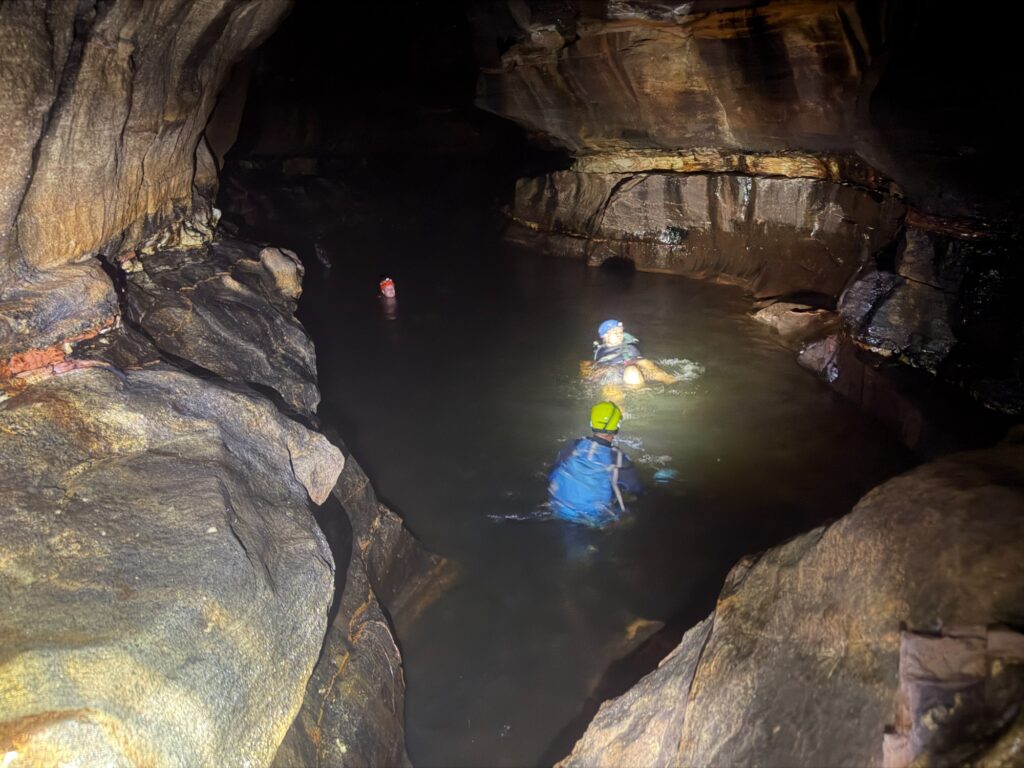
Most of the canyon I was staying at the back, suffering from moderate right ankle pain and also being the group’s photographer. The water was surprisingly really warm, perhaps thanks to the hot day setting the canyon into a steamy sauna. We all got extra layers in anticipation of cold water, but they were fortunately not needed. The sections of swimming felt more like swimming into distant void.
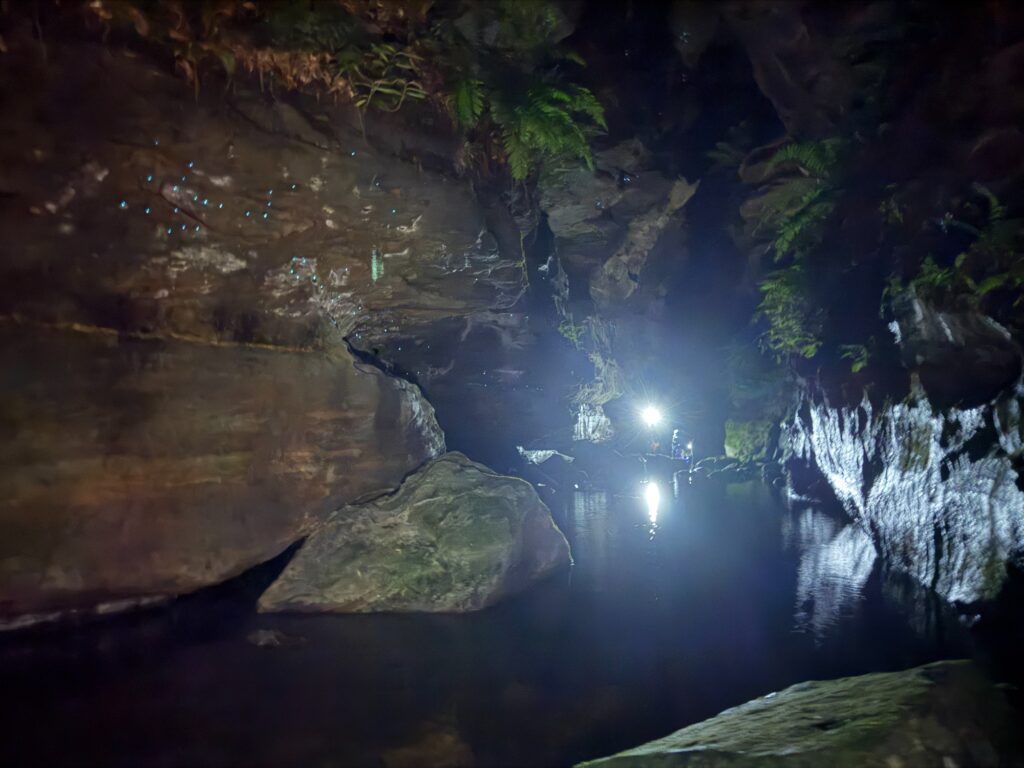
Probably the nicest picture of glowworms I’ve got throughout the entire night. The canyon then opens up from its constriction, still with a few glowworms near the overhangs. Fortunately, we can attest that no monsters live in this canyon.
A few short swims we’ve got to the end of the canyon, rejoining the tourist track. We were greeted with a commercial group, looking more like a school group of ~20 people doing the exact same thing, except that they’ve probably started from the upper canyon. A short snack break followed where we changed into our bushwalking clothing, walking out of Grand Canyon.
We got back to the car at roughly 11:40 pm, just before midnight. The YHA I’m staying at for that night has been frantically trying to get in contact with me, as the receptionist lady wants to sleep before midnight. Luckily, Blackheath is just ~15mins away from Katoomba, and we were lucky with the traffic light sequence through a long one-way roadwork section at Medlow Bath. First stop, Katoomba YHA, where I checked into my room, woke up my roommates with all the unpacking noise, had a long shower before making my own bed and calling it a day. Sasha planned to camp around the area as well. I’ve originally suggested Katoomba Airfield, but we settled on dropping him off at Narrow Neck Carpark, where he can camp wherever he pleases.
Day 2: Narrow Neck Abseiling training
Sasha ended up camping on top of Abseil Station No. 1 on our Narrow Neck abseiling spot. It was a small ledge with just enough space for a sleeping bag. The breeze was gentle overnight and he had a good sleep, waking up with views of Megalong Valley. He then came over to my YHA, where he stored a few bags in my room, and used the hostel’s shower. At this point I’ve occupied almost the entire room with my belongings, Sasha’s guitar on one side, my wetsuit hanging on the bed frame, and 3 helmets on the coat hooks. The hostel had a heater on overnight and it was a really warm night of sleep (and at the same time drying out my wetsuit).
We went to Cafe Lurline for breakfast, as recommended by Adam. The big breakfast was really good, albeit a bit pricey as expected. We then headed back to the station, joining the rest of the group at the bus stop just outside of Carrington Hotel. As part of my routine prep for beginner canyons/abseils, I’ve requested everyone to complete a pre-reading before coming, covering how the equipment works and common abseiling scenarios. Everyone completed their pre-reading except one person (Liam), which means I can skip through the boring speech on how everything works.
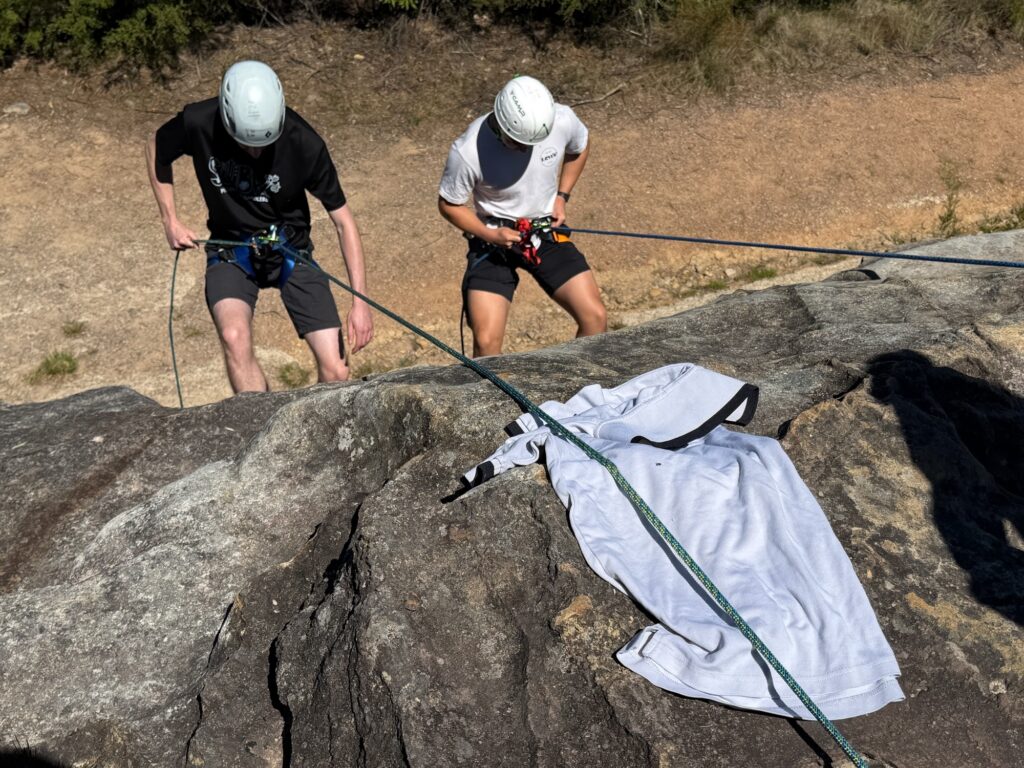
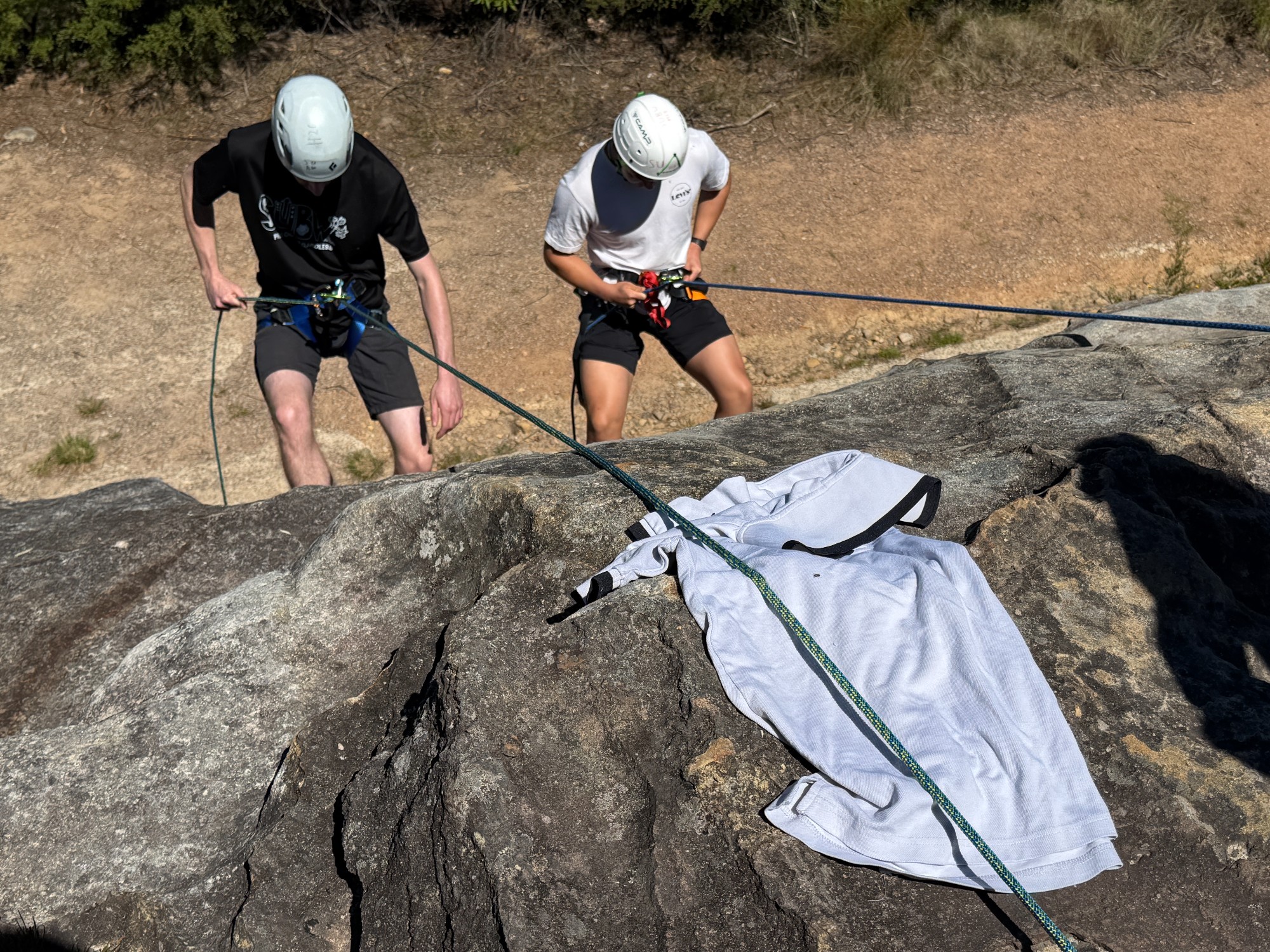
Station 1 is a small rock of roughly 5 metres, perfect for showcasing abseil positioning and setting up descenders. There are 2 sets of bolts and 2 parallel abseils were set up, both of which were equalised using a sling. Good thing about pre-reading is that my role is now to recall knowledge, not to introduce new knowledge. Everyone had a basic idea of how to perform safety checks (Abseil A-Es), and with a short demonstration, they are good to go. Upon request from Adam, I’ve also shown how my releasable anchor setup can be utilised to lower an abseiler, using Adam as our test subject. Another thing I’ve tried is the use of my old placement T-shirts as rope protectors. With about 2 tries per person, we’ve all got the hang of how everything works, and we moved on to our next station.
The main difference between abseiling through a commercially run tour and our club is our teaching approaches. Tour groups are there for you to have a good time- whether you’ve learnt something isn’t their primary focus. For us, we have a stronger focus on independent practice and critical thinking. Everyone had a chance to evaluate their setup critically and set up for an abseil without any assistance. How we are a bushwalking society and not a tour agency ultimately depends on our communication styles and how we empower people to be independent in decision-making.
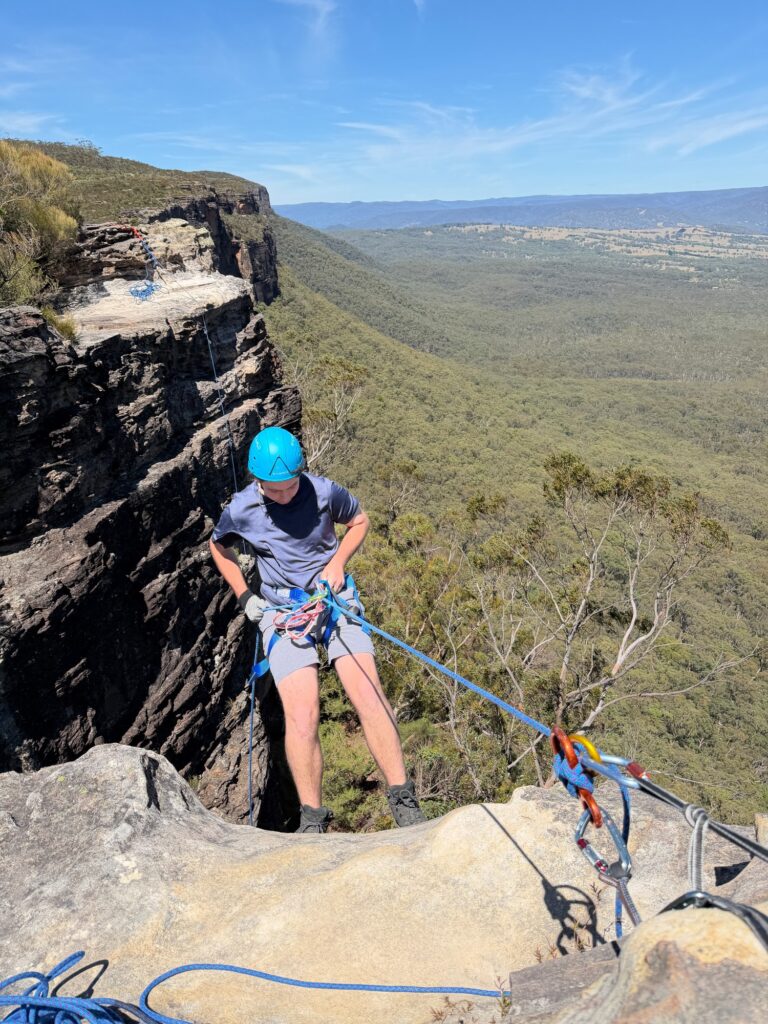
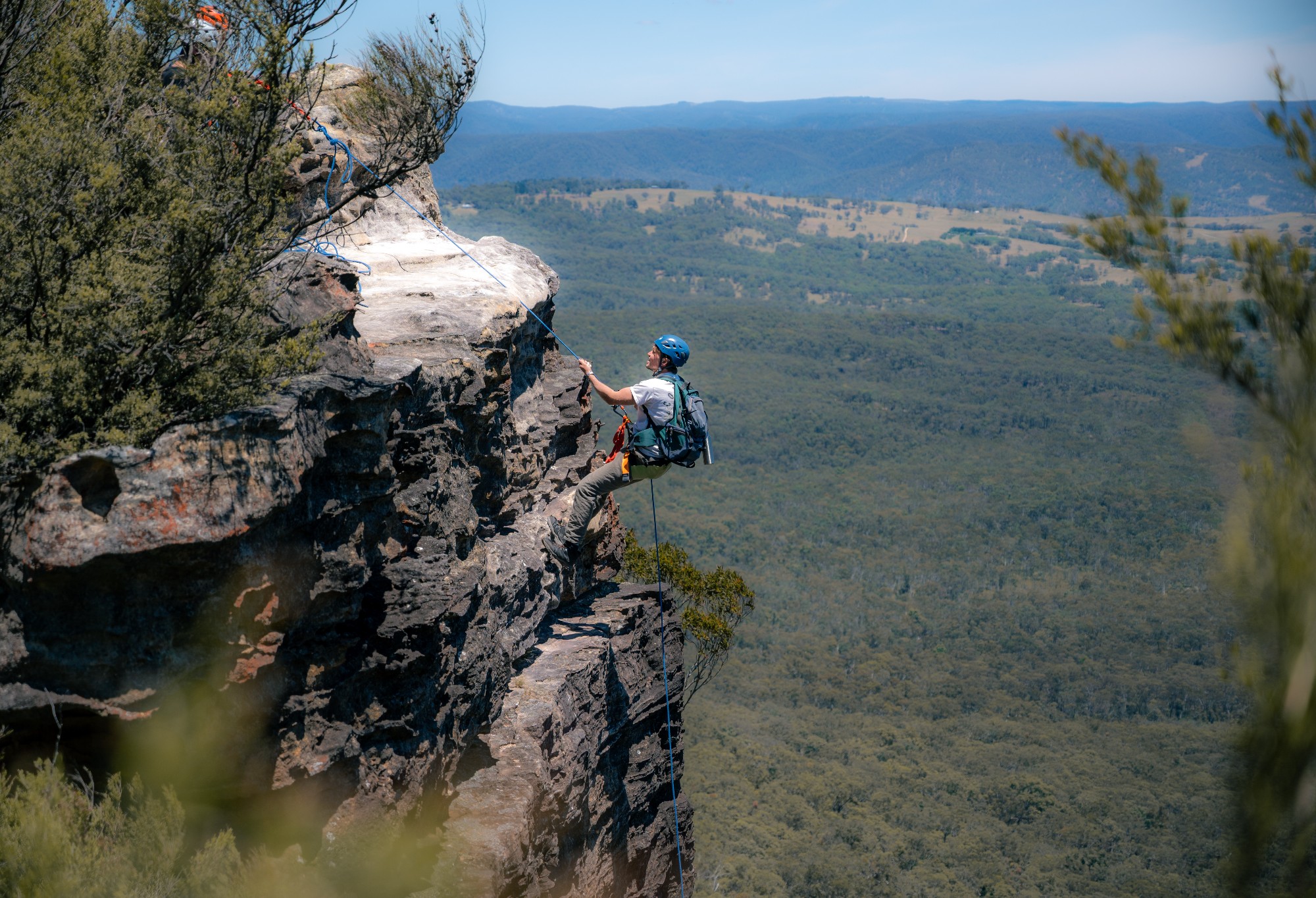
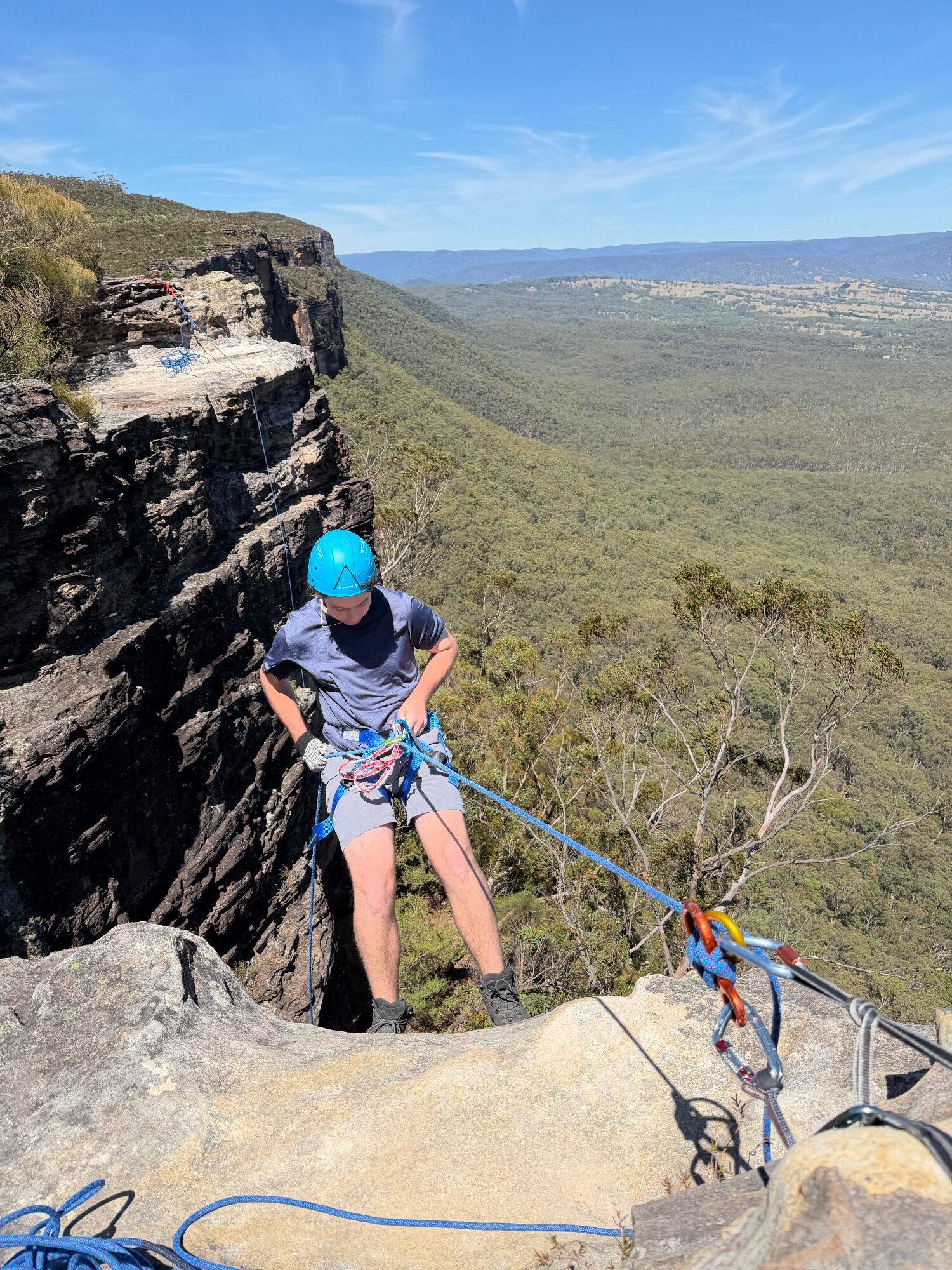
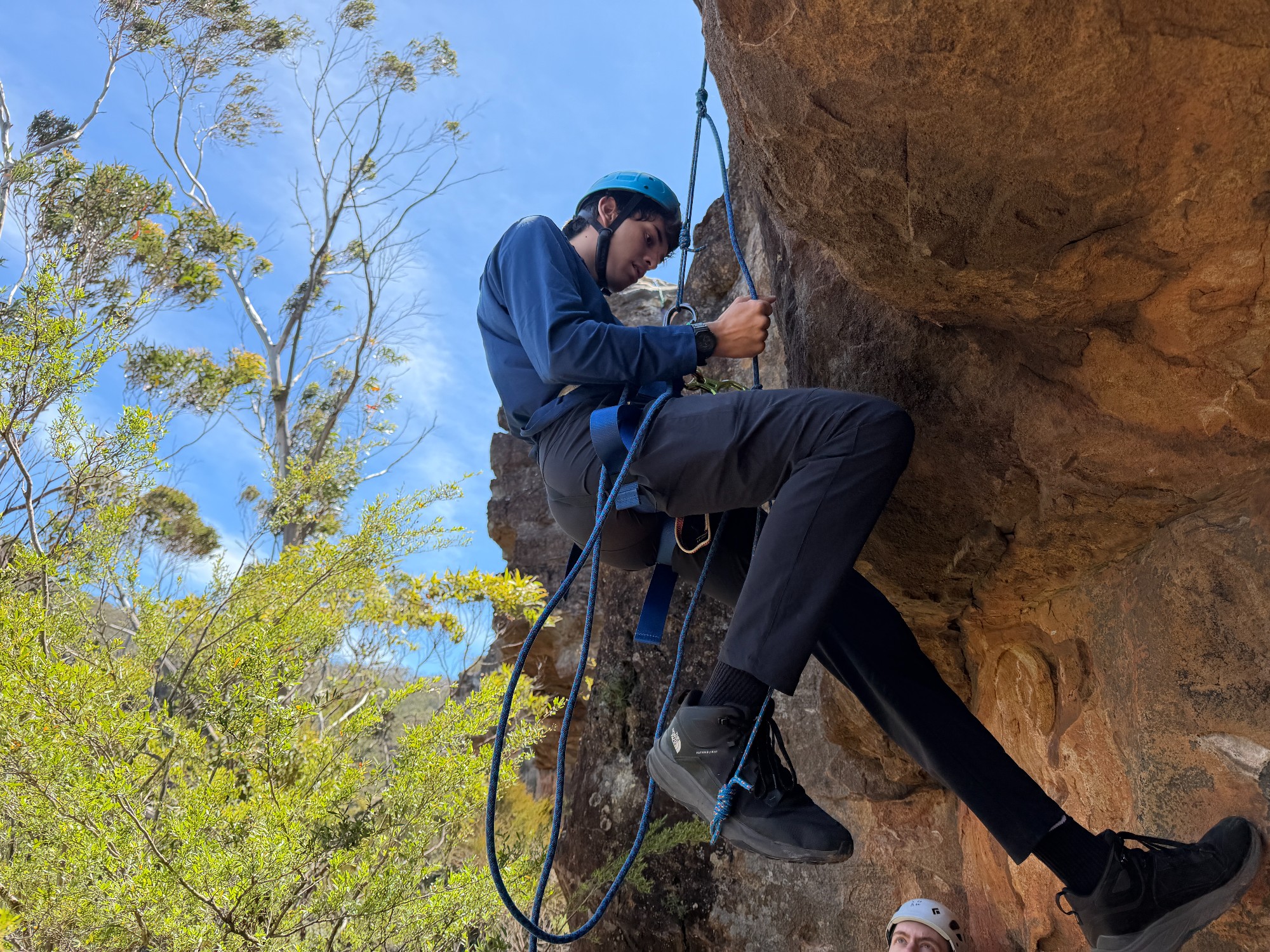
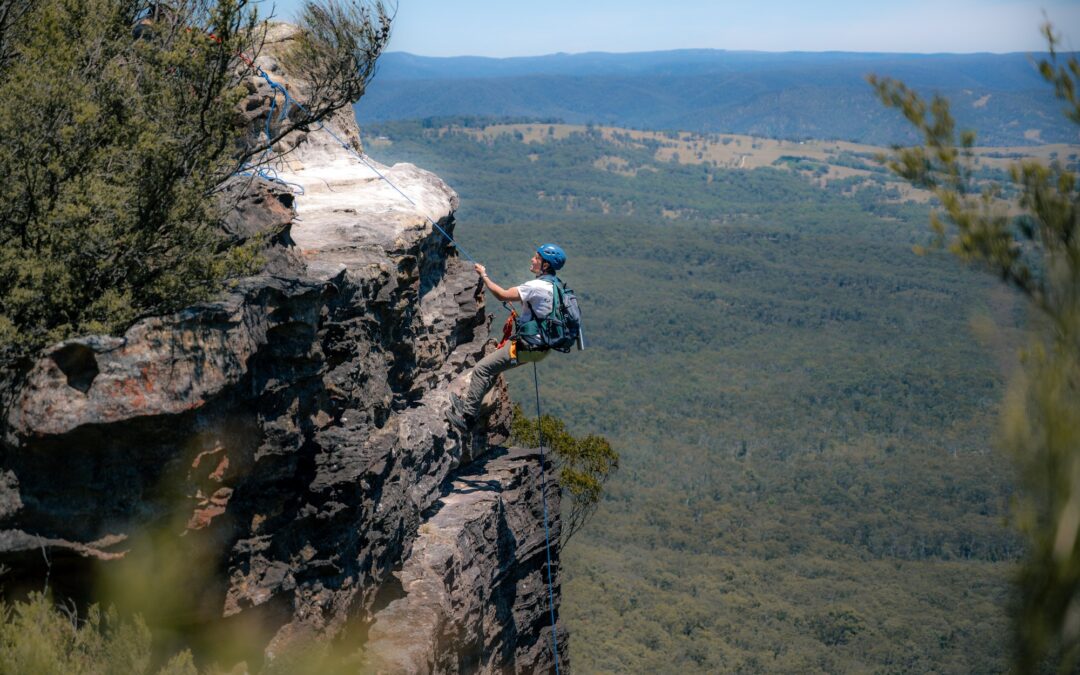
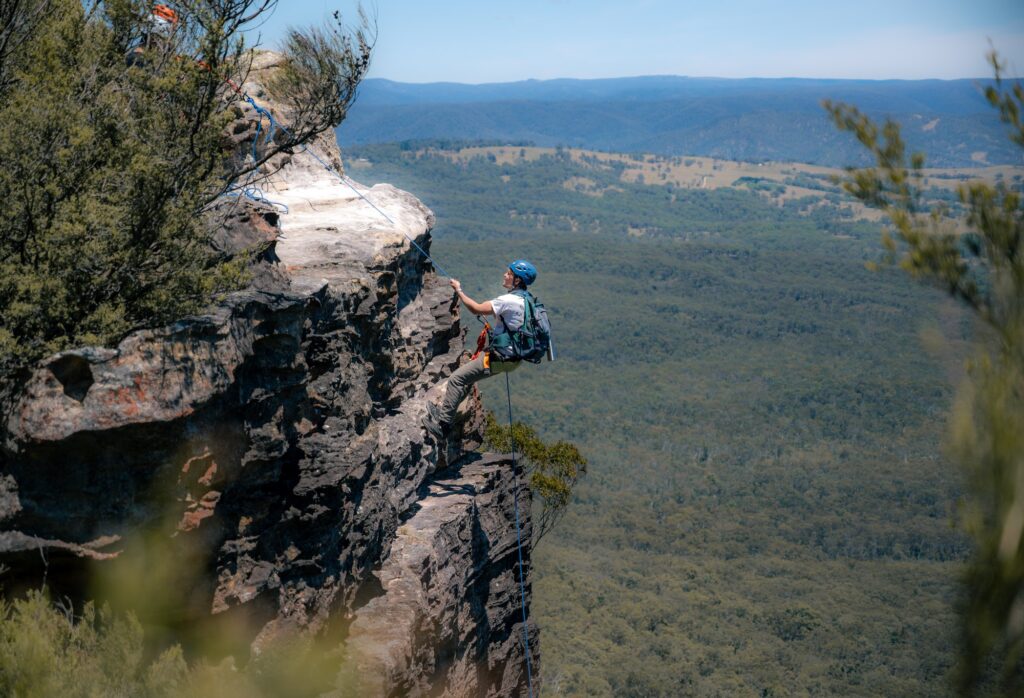
Station 2 is a ~20m pitch, with 2 sets of anchors, one on each side of the cliff. We’ve rigged the abseil on both sides, giving us more space to practice prusiking afterwards. Everyone did their safety checks independently and headed down, with Adam bottom belaying from beneath. Another feature of this pitch is a simple overhang at roughly 2/3 of the abseil, a common feature in canyons. Abseiling around an overhang can be tricky for beginners, but with a bit of practice, everyone went down without much issue.
We then practised self-rescue and ascending through the use of prusiks. It’s a tedious process but also quite a fun experience. We’ve had a few runs of practising how to tie a prusik hitch/klemheist, ascending using a chest prusik and leg loop and coming back down.
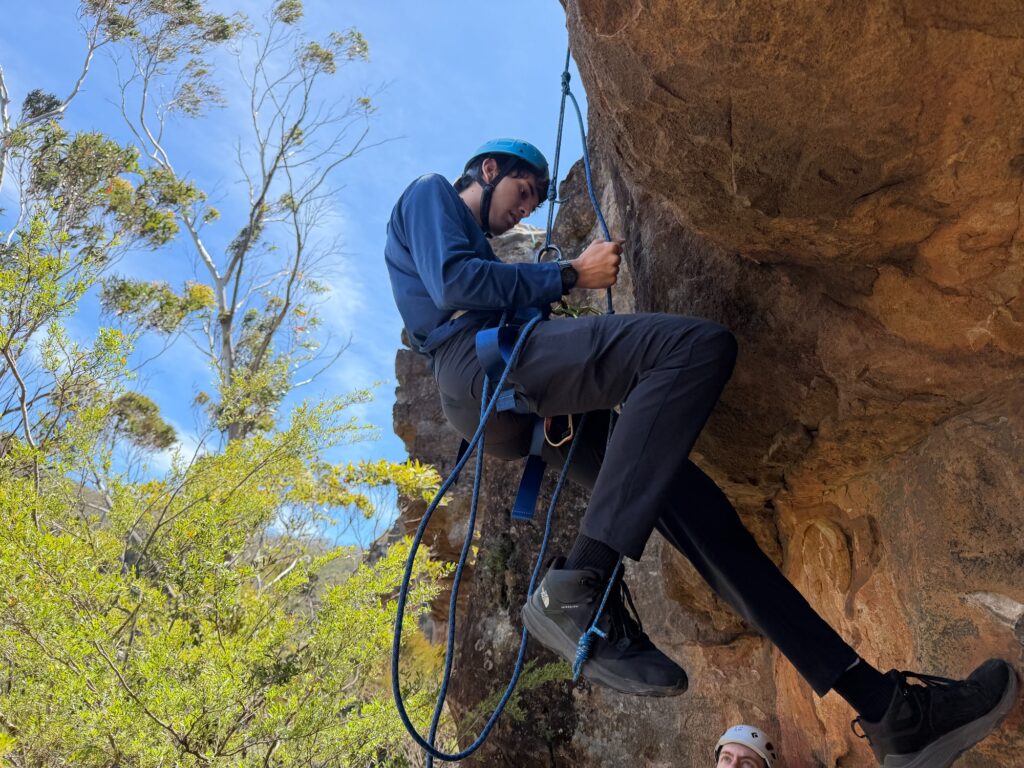
The 3-hour session ended with a final run down the abseil. We walked back up to the anchor and collected everything. Beginners should probably be taught flaking ropes in future, so it’ll be us watching them flake ropes instead of them watching us do that.
Our day finished with lunch at Mountain Culture. Others went home while I went shopping in Coles for dinner. Not much to do in Katoomba, as I spent the entire night on my laptop in the YHA. The kitchen and dining hall still retain the Art Deco-style architecture. Unlike other YHAs (or Hostelling Intl. hostels in other countries), where it’s more of a close-knit community, the one in Katoomba is quite a boring place full of boring European tourists.
Day 3: Serendipity (Why Don’t We Do It In The Road) Canyon
I woke up with my coffee vanishing from the communal fridge. Perhaps that’s why Katoomba police station is next to the YHA. With my $3 Farmers Union coffee gone, I had to patronise one of the cafes to get my daily caffeine.
Starting from Mt Wilson, we headed down from Cathedral Reserve, and soon we had our first abseil. OzUltimate describes that the canyon’s name, Why Don’t We Do It In The Road canyon, was named by Tony Norman, a Beatles fan, who was in one of the first parties to visit the upper section of the creek. Now it’s more commonly known as Serendipity Canyon, a great beginner canyon with quite a number of abseils.
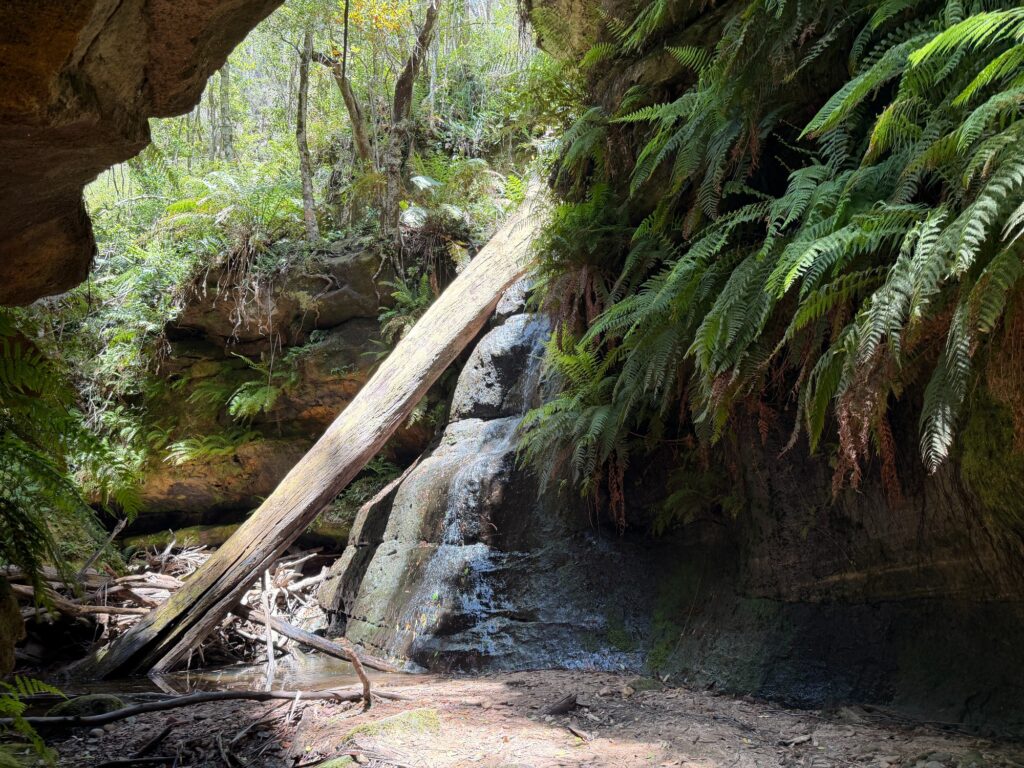
The first half of the canyon is dry with numerous short abseils. Towards the second half, the constriction starts and that’s where we get sections of swims.
The period where the semester ends is the perfect timing for canyons, when the club is significantly quieter. Fewer exchange students, more members who hang around for long. I was having this conversation with my friend who studies social science the other day, and the idea of being a global citizen vs a global consumer came along. Global consumers see travel as a consumption, destinations as commodities, and a focus on collecting experiences. Global citizens, meanwhile, focus on making contributions and valuing engagement in communities. It’s clear how one is sustainable, and one isn’t. This is the time when there are more good vibes around the club, great for running trips.
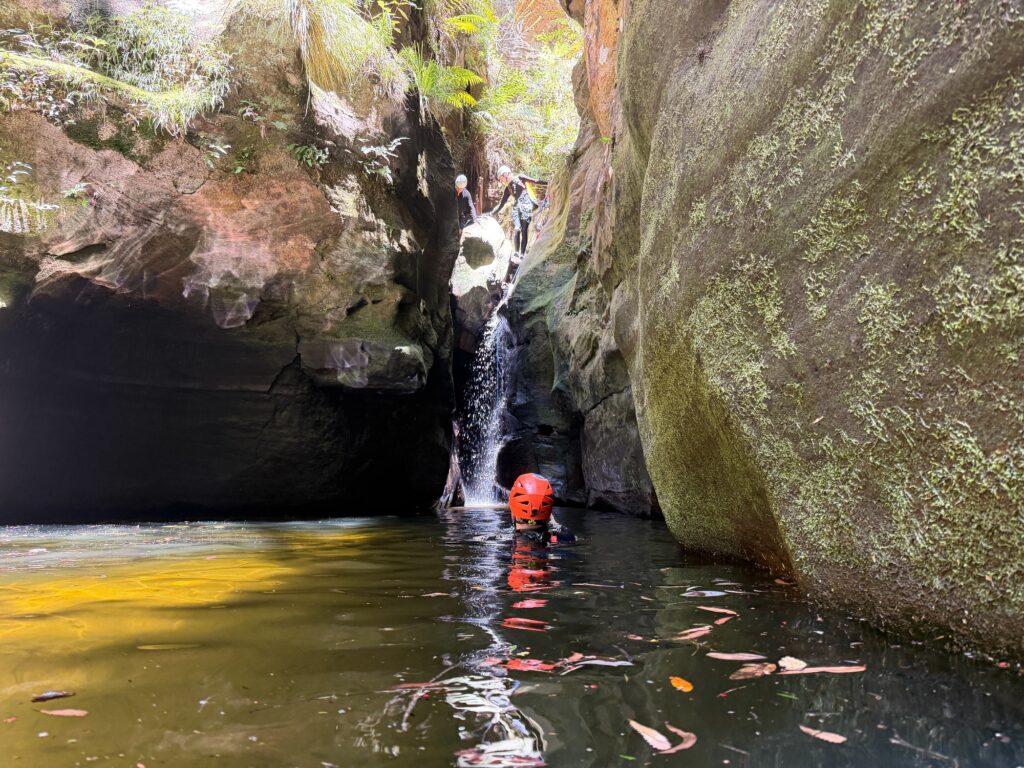
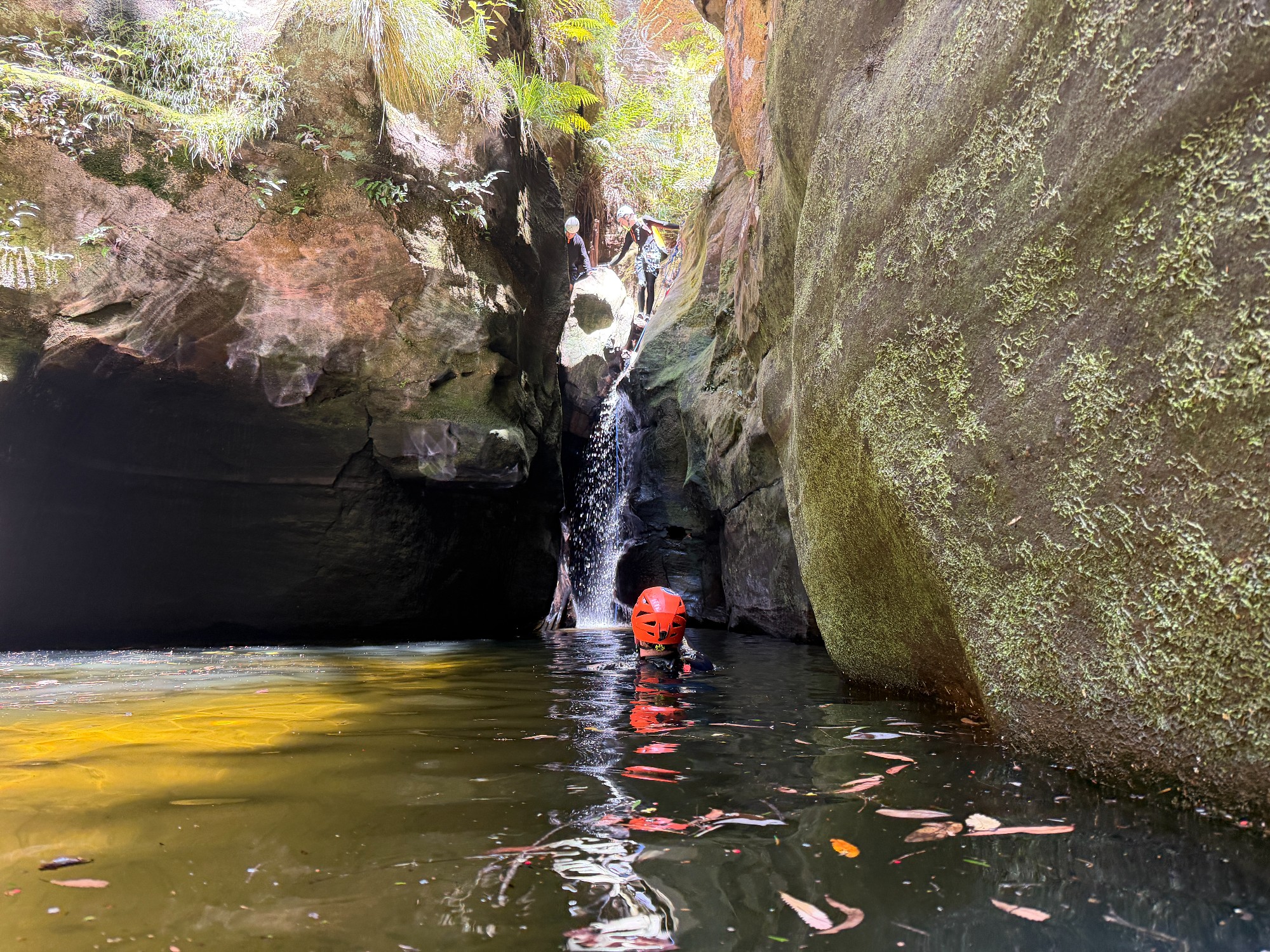
Final 2 abseils lead into the water. One can be a jump, but it has to be a big leap as the water near the base of the waterfall is fairly shallow. Adam was the only person who attempted it, while Theo decided it was safer to abseil down.
The canyon then leads to the Wollangambe River. We curved around to the left, scrambling along an exposed ledge, before heading back up to Cathedral Reserve, where our car is parked. Others continued the day with a run through Empress Canyon, while I opted for a train home.
A common theme amongst those 3 days is that the Hong Kong fires were mentioned on all of them. It’s probably a good idea to get off social media if the pictures and scenes are getting overwhelming. “Grip tight to our home, the moment before it all vanishes into darkness. If this is the home you love, please don’t sit aside and watch it collapse”, a message stuck on a pillar as my friend paid his respects at the site of disaster.